
Basic Income – Scotland in a moment of opportunity
- Written by: Allan Faulds — Policy and Information Assistant
- Published: 1st December 2021
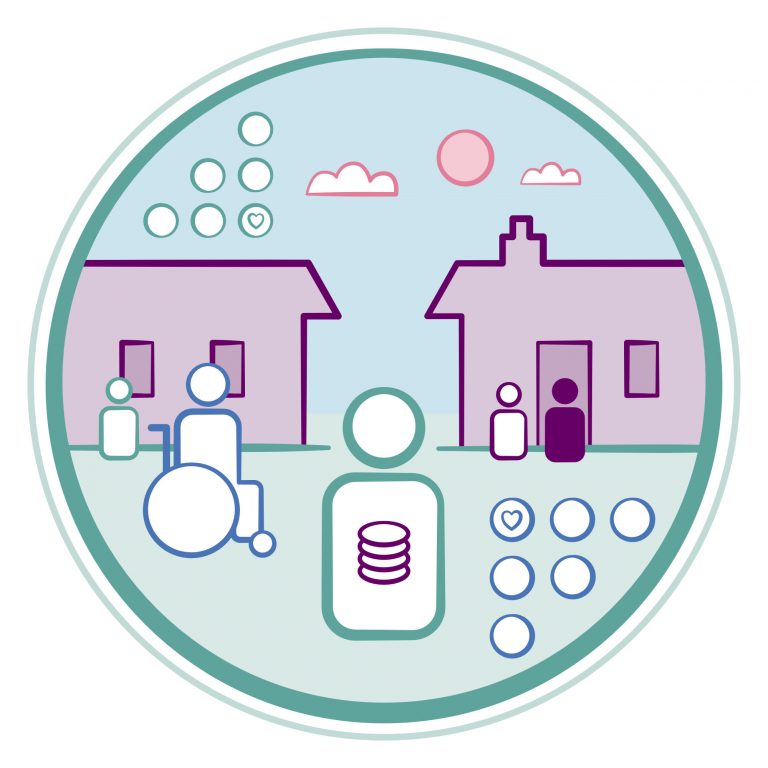
Allan Faulds argues that a Basic Income could be truly transformational - but though the time may be right, barriers remain.
“Scotland as a land of opportunity” was one of the aspirations contained in this year’s programme for government. Although Scotland may not yet be that land, reflecting on where we are now certainly feels like a historic moment of opportunity. Almost two years into a difficult pandemic, we have all found ourselves thinking about the value we put on those around us – how we carry each other through hard times, how we protect each other from illness, and how we support each other to live our best lives.
Those questions were at the heart of the recent Feeley Review into Adult Social Care, which identified the scale of change necessary to ensure people receiving and delivering care can fully realise their fundamental human rights to independent living and equal participation in society. At the same time the gradual implementation of a more caring and dignified devolved social security continues apace. Child Disability Payment recently launched, whilst payments for disabled adults and pensioners, as well as unpaid carers, are due in coming years.
It’s that context, this moment of opportunity for showing that society truly values all its members, that led the Health and Social Care Academy to re-visit our 2017 paper on Basic Income. We’ve witnessed several developments since then, not least that during the pandemic the First Minister and most of Scotland’s leading political parties came out explicitly in favour of trialling Basic Income. In August, the Academy hosted a session on ‘Making Universal Basic Income transformational for everyone’ at the Basic Income Earth Network Congress in Glasgow.
In our refreshed paper, we consider some of the ways in which a Basic Income could be transformational, and how it could value people and work previously under-recognised. The unconditional nature of the payment could reduce the stigma of social security and enable people with caring responsibilities to balance those with paid employment as best suits them. And at a time when the need for fundamental change to our economy is very much on the agenda, Basic Income aligns with new approaches such as the wellbeing economy or human rights and gender budgeting.
We also highlight some of the very real concerns and difficulties. A Basic Income which is used as justification to cut vital services, or which isn’t shaped by and doesn’t account for disabled people’s additional costs of living, would be a worrying step backwards. Additionally, devolved social security powers aren’t sufficient to implement a Basic Income in Scotland, and this may similarly be a barrier to the possible alternative of a Minimum Income Guarantee.
We wanted this version of the paper to be truly thought provoking. Threaded throughout are a series of questions – challenges even – to identify what could make a Basic Income better, or what might mean it isn’t really the solution needed. Whether you support or oppose a Basic Income, whether that changes after you’ve read the paper, doesn’t matter so much as whether it sparks new thoughts and new ideas.
Scotland can indeed be a land of opportunity if we seize this moment to reshape the systems so many rely on but which have too often let them down, and put people at the centre of that change to deliver a society that emphasises humanity, values and flourishing. You can read the full ‘Emphasising humanity and transforming livelihoods: Basic Income’ paper here.
End of page.
You may also like:
A child cannot truly feel safe in a school or community if they do not feel that they belong.
Continue readingFor 20 years, The ALLIANCE has listened to member voices to help protect and improve Scotland's care services.
Continue readingWith the ALISS Customisable Map Tool, organisations can share info about community resources in ways that work for the people they support.
Continue readingIrene Mackintosh, CEO at Mhor Collective shares highlights and hopes for rights in a digital age.
Continue readingIn her latest TFN column, our Chief Officer Sara Redmond reflects on the proposal to collapse Scotland's 14 regional health boards into two.
Continue readingWhen we listen to lived experience, we create better resources, challenge assumptions and help create safer communities for everyone.
Continue readingGozie reflects on supporting citizen engagement, digital inclusion and hopes for the future.
Continue readingDCP member and Project Co-ordinator Esther Misajel shares Pachedu's journey towards digital inclusion.
Continue readingChris Mackie, Director of Digital, reflects on what ALISS has achieved so far this year and shares what is still to come.
Continue readingAt the ALLIANCE and beyond, true and meaningful policy reform means turning people's experiences into lasting action on the ground.
Continue readingGLP-1s can transform health but without adequate wraparound support, weight loss may come at the cost of nutrition, muscle and wellbeing.
Continue readingSheila Duffy, Chief Executive of ASH Scotland, is appealing for support for proposals to restrict tobacco, vapes and nicotine products.
Continue readingBilly McClean reflects on why SCIC26 offers a vital opportunity to learn together, share what works, and shape the future of integrated care
Continue readingTo mark the ALLIANCE's 20 year anniversary Paul Okroj reflects on the importance of supported self management.
Continue readingTo mark Scottish Learning Disability Week (7 - 13 September), Bruce Adamson reflects on this year's call to action.
Continue readingIn her latest TFN column, our Chief Officer Sara Redmond reflects on the current state of social care in Scotland.
Continue readingKicking off September for the ALLIANCE's 20 year anniversary, Grace reflects on the Self Management Programme
Continue readingSara Redmond, ALLIANCE Chief Officer, on the priorities for 2026's Programme for Government.
Continue readingSandra Auld reflects on the ALLIANCE's people focused impact, collaboration, lived experience, campaigns and lasting change in Scotland.
Continue readingMark shares his experience with gambling harms, and how this intersected with the launch of the ALLIANCE's ScotRGH programme in 2020.
Continue readingProfessor Anna Glasier celebrates 20 years of the ALLIANCE and it's vital role in shaping the Women's Health Plan for Scotland.
Continue readingSara Redmond, ALLIANCE Chief Officer, on the challenges faced by community-led health organisations in delivering prevention.
Continue readingAnnie shares her experience of youth politics, and how SAFE has helped her make connections and makes sense of the world of politics.
Continue readingChloe Craig reflects on how we have helped connect Scotland’s lived experience voice to conversations happening beyond our borders.
Continue readingDr Irene Oldfather reflects on two decades of growth, collaboration, and person centred impact across Scotland and beyond.
Continue reading