
Human rights – the key to change in mental health?
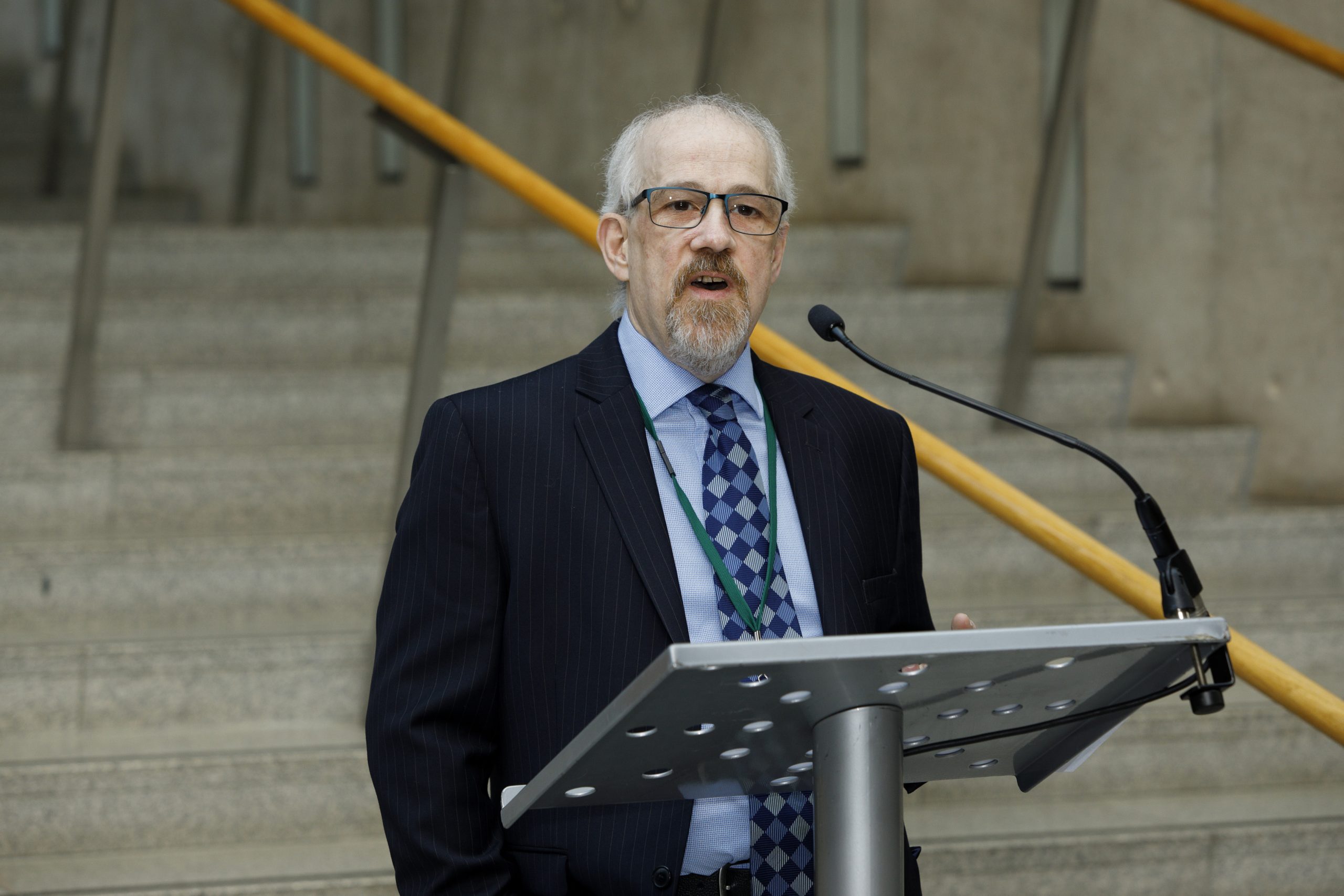
- Written by: Gordon Johnston — VOX (Voices of eXperience) — Director
- Published: 24th April 2023

Gordon Johnston, Director of VOX, reflects on what is needed for a human rights based approach to unlock positive change in mental health.
The publication of ‘The Opportunity Is Now’ is especially timely for those of us working in mental health, with several major developments on the horizon.
The Scottish Government’s new Mental Health and Wellbeing Strategy will be published before the summer recess. A set of standards for adult secondary mental health services will be implemented soon. And the extensive final report from the Scottish Mental Health Law Review (The Scott Review) is currently being considered by government.
The forthcoming incorporation of human rights treaties into Scots law is very welcome. This legislation could bring opportunities for major improvements within mental health. I say ‘could’ quite deliberately here – because experience shows that good legislation doesn’t necessarily translate into real improvements for people.
Human rights can often be seen as abstract, separate from our everyday lives. The language used may put some off. And it can feel like people with lived experience of mental ill health face more important challenges each and every day. But a human rights based approach could lead to the changes we want.
When The ALLIANCE and VOX (Voices of eXperience) consulted on new standards for adult secondary mental health care, we asked people with lived experience and carers what changes they would like to see.
They outlined five main priorities: easier access to support, better information to make the system simpler, consistency across the country, improved communications, and to be treated as equal partners in their own care.
These priorities were not expressed in human rights language – but they clearly echo the PANEL principles commonly used in human rights frameworks. And what are service standards but a way of realising the right to health?
The Scottish Mental Health Law Review was more explicit in its final report, stating that the purpose of legislation should be, “to ensure that all the human rights of people with a mental or intellectual disability are respected, protected and fulfilled.”
So could adopting a human rights based approach in mental health become the key that unlocks positive change? Possibly – but there are several things that need to be put into place first.
‘The Opportunity Is Now’ correctly recommends that a programme of human rights education should be considered. But this must not be limited to those who design and deliver services – the duty bearers in human rights language. It must also be extended to the rights holders – and that’s each and every one of us. How can we be sure that our rights are being upheld unless we have knowledge of what those rights actually are?
And, just as many people require advocacy services to support their interactions with an often complex and bureaucratic health and care system, many will require expert assistance to realise their human rights. Collective advocacy organisations should also be key partners in redesigning the mental health system, ensuring that the voices of lived experience are front and centre.
The Scott Review puts this very well: “The Scottish Government should provide resource to ensure people with lived experience and unpaid carers with lived experience can participate in work to implement recommendations on an equal footing with others.” I couldn’t agree more!
The next few years will be very important in mental health. We all know the system is currently under great pressure. New community based initiatives focussed on early intervention, prevention and recovery are required – in addition to high quality mental health services. And we must tackle the societal inequalities that drive so many other issues for excluded communities.
But, if we all work together, we can drive change in the mental health system using a human rights based approach.
Read ‘The Opportunity is Now‘ report in full.
End of page.
End of page.
You may also like:
A child cannot truly feel safe in a school or community if they do not feel that they belong.
Continue readingFor 20 years, The ALLIANCE has listened to member voices to help protect and improve Scotland's care services.
Continue readingWith the ALISS Customisable Map Tool, organisations can share info about community resources in ways that work for the people they support.
Continue readingIrene Mackintosh, CEO at Mhor Collective shares highlights and hopes for rights in a digital age.
Continue readingIn her latest TFN column, our Chief Officer Sara Redmond reflects on the proposal to collapse Scotland's 14 regional health boards into two.
Continue readingWhen we listen to lived experience, we create better resources, challenge assumptions and help create safer communities for everyone.
Continue readingGozie reflects on supporting citizen engagement, digital inclusion and hopes for the future.
Continue readingDCP member and Project Co-ordinator Esther Misajel shares Pachedu's journey towards digital inclusion.
Continue readingChris Mackie, Director of Digital, reflects on what ALISS has achieved so far this year and shares what is still to come.
Continue readingAt the ALLIANCE and beyond, true and meaningful policy reform means turning people's experiences into lasting action on the ground.
Continue readingGLP-1s can transform health but without adequate wraparound support, weight loss may come at the cost of nutrition, muscle and wellbeing.
Continue readingSheila Duffy, Chief Executive of ASH Scotland, is appealing for support for proposals to restrict tobacco, vapes and nicotine products.
Continue readingBilly McClean reflects on why SCIC26 offers a vital opportunity to learn together, share what works, and shape the future of integrated care
Continue readingTo mark the ALLIANCE's 20 year anniversary Paul Okroj reflects on the importance of supported self management.
Continue readingTo mark Scottish Learning Disability Week (7 - 13 September), Bruce Adamson reflects on this year's call to action.
Continue readingIn her latest TFN column, our Chief Officer Sara Redmond reflects on the current state of social care in Scotland.
Continue readingKicking off September for the ALLIANCE's 20 year anniversary, Grace reflects on the Self Management Programme
Continue readingSara Redmond, ALLIANCE Chief Officer, on the priorities for 2026's Programme for Government.
Continue readingSandra Auld reflects on the ALLIANCE's people focused impact, collaboration, lived experience, campaigns and lasting change in Scotland.
Continue readingMark shares his experience with gambling harms, and how this intersected with the launch of the ALLIANCE's ScotRGH programme in 2020.
Continue readingProfessor Anna Glasier celebrates 20 years of the ALLIANCE and it's vital role in shaping the Women's Health Plan for Scotland.
Continue readingSara Redmond, ALLIANCE Chief Officer, on the challenges faced by community-led health organisations in delivering prevention.
Continue readingAnnie shares her experience of youth politics, and how SAFE has helped her make connections and makes sense of the world of politics.
Continue readingChloe Craig reflects on how we have helped connect Scotland’s lived experience voice to conversations happening beyond our borders.
Continue readingDr Irene Oldfather reflects on two decades of growth, collaboration, and person centred impact across Scotland and beyond.
Continue reading