
Government commitment to children remains as vital as ever
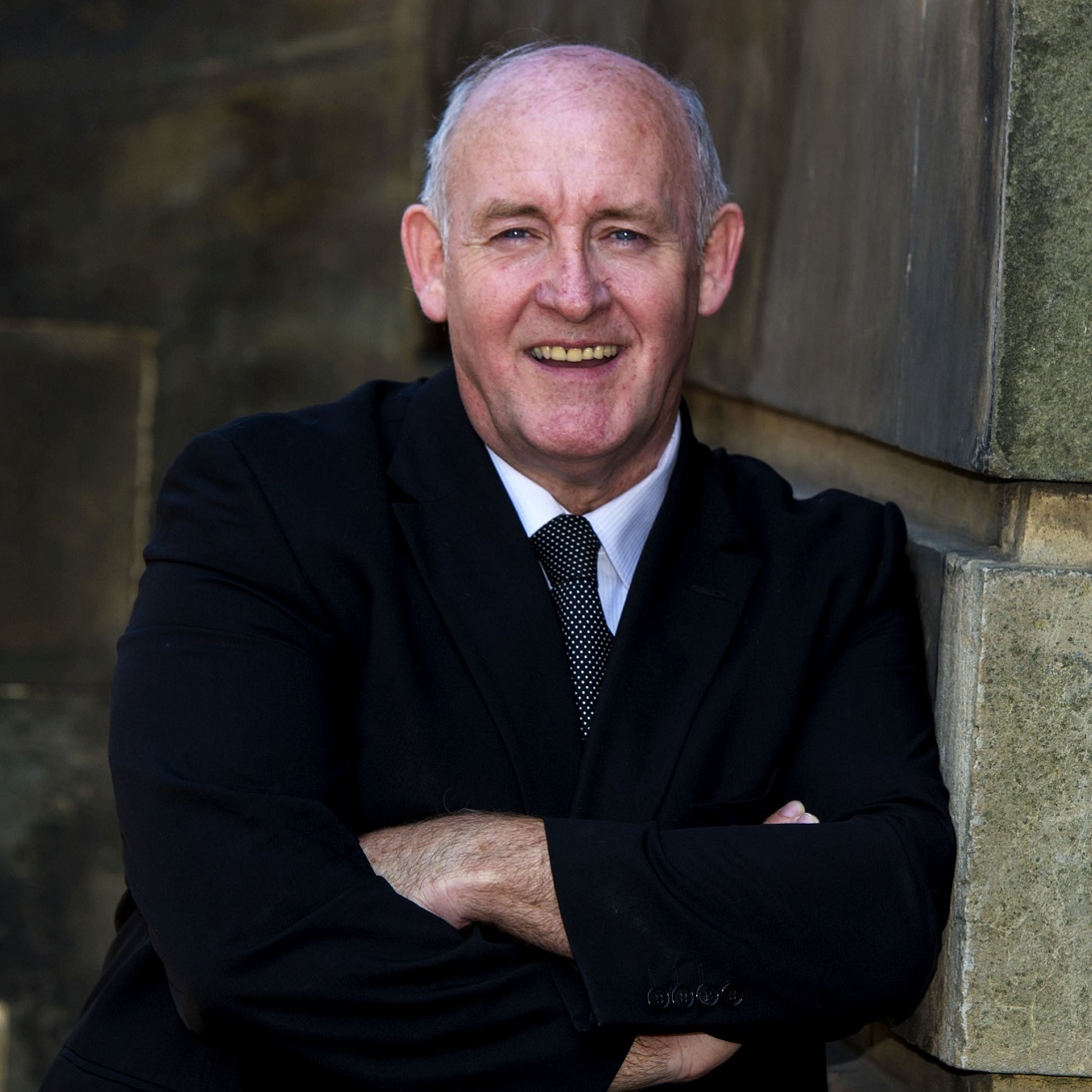
- Written by: Professor Ian Welsh OBE — Chair, Getting It Right For Every Child (GIRFEC) Practice Development Panel
- Published: 20th September 2019

Ian welcomes the response to the report of the Getting it Right for Every Child Practice Development Panel.
The most significant thing that John Swinney, Deputy First Minister, announced yesterday in response to my Panel’s report was not the withdrawal of the Children and Young People Information Sharing Bill nor the repeal of Parts 4 and 5 of the Children and Young People (Scotland) Act 2014 but the reaffirmation of the Government’s commitment to the Getting it right for every child policy, a policy that successive Governments over the last 14 years have championed and for which they have maintained significant cross party support.
It takes time to change culture and attitudes but we are now seeing the Getting it right for every child programme deliver across Scotland. It continues to be a cutting-edge approach to delivering a safe and protective, challenging and inclusive cross-sector partnership programme for children and families, with international respect.
All of us, across the parties and the communities, should be proud of and invested in the approach.
As well as changes to culture and attitudes over the last few years, we have also seen data protection law undergo a 20-year update, some of that happening as the Panel sat, (with our legal sub-group exploring Scots and UK law, regulation and guidance, as well as relevant European and international law) and it is now much clearer on how, and when, information may be shared.
The key point to be made about the Panel’s view (on developing a code of practice in relation to information sharing) is that we concluded that we can rely on the law as it is now, founded on the Data Protection Act and GDPR. This detailed law brings to the fore safeguards to unwarranted sharing of information while also being more explicit in relation to when information may be shared legally.
Consequently, the clear and direct advice to Mr Swinney from the Panel in relation to a statutory code of practice for information sharing to support health visitors, teachers and others in their roles was that new law on information sharing was neither necessary nor desirable and I’m pleased that he has recognised the significance of that in his announcement.
Although the consequence of that conclusion, as announced by the Deputy First Minister, is that the Government will not embed named persons in legislation, the Panel believes it remains a progressive and humane policy: early intervention to maximise later life opportunities, underpinned by the development of resilience in young people, supported by a responsive and sympathetic named person approach which puts partnership power into the hands of parents and young people.
It is also important to restate that families having a clear point of contact within the system, a contact that works for them, remains part of that strong set of GIRFEC cultural values. An identified health visitor or senior teacher who families can turn to for information, advice or help to get services is critical when they want early support. Equally, those named persons in the system (working for families, having a role to highlight to them when they see an opportunity to improve a child’s life) are enhancing the wellbeing of our nation.
The statement in Parliament from Mr Swinney on scrapping the legislation for named persons for children and young people is, therefore, to be welcomed and so, also, is his continued support for a named person policy approach. Not because it represents a climb-down from providing access to support for all children but that it shows just how far we have come since that legislation was first considered necessary in 2014 when the legislation for named persons was voted through Parliament with no opposition.
In the interim, our public services, shifting further towards empowering, person-centred approaches where trusting, non-judgmental relationships is the foundation of working together, are much more aware of, and responsive to, the societal effects of poverty, health inequalities, the drive for early years improvement, adverse childhood experiences, the need for trauma informed staff and services, coproduction of services with citizens, empowering partnerships with parents, health and social care integration, human-rights based approaches and other health and social circumstances that impact on families.
Finally, I’m pleased that the Government has taken its time to properly reflect on the Panel Report, to examine and assess the work already well advanced in refreshed GIRFEC guidance, to acknowledge the very strong and extensive engagement process the Panel undertook and I’m delighted that it will move now to develop practitioner confidence in working with families, sharing the right information with the right people at the right time, delivering the services they want and need.
This article was originally published in the Herald on Friday 20th September 2019.
End of page.
You may also like:
A child cannot truly feel safe in a school or community if they do not feel that they belong.
Continue readingFor 20 years, The ALLIANCE has listened to member voices to help protect and improve Scotland's care services.
Continue readingWith the ALISS Customisable Map Tool, organisations can share info about community resources in ways that work for the people they support.
Continue readingIrene Mackintosh, CEO at Mhor Collective shares highlights and hopes for rights in a digital age.
Continue readingIn her latest TFN column, our Chief Officer Sara Redmond reflects on the proposal to collapse Scotland's 14 regional health boards into two.
Continue readingWhen we listen to lived experience, we create better resources, challenge assumptions and help create safer communities for everyone.
Continue readingGozie reflects on supporting citizen engagement, digital inclusion and hopes for the future.
Continue readingDCP member and Project Co-ordinator Esther Misajel shares Pachedu's journey towards digital inclusion.
Continue readingChris Mackie, Director of Digital, reflects on what ALISS has achieved so far this year and shares what is still to come.
Continue readingAt the ALLIANCE and beyond, true and meaningful policy reform means turning people's experiences into lasting action on the ground.
Continue readingGLP-1s can transform health but without adequate wraparound support, weight loss may come at the cost of nutrition, muscle and wellbeing.
Continue readingSheila Duffy, Chief Executive of ASH Scotland, is appealing for support for proposals to restrict tobacco, vapes and nicotine products.
Continue readingBilly McClean reflects on why SCIC26 offers a vital opportunity to learn together, share what works, and shape the future of integrated care
Continue readingTo mark the ALLIANCE's 20 year anniversary Paul Okroj reflects on the importance of supported self management.
Continue readingTo mark Scottish Learning Disability Week (7 - 13 September), Bruce Adamson reflects on this year's call to action.
Continue readingIn her latest TFN column, our Chief Officer Sara Redmond reflects on the current state of social care in Scotland.
Continue readingKicking off September for the ALLIANCE's 20 year anniversary, Grace reflects on the Self Management Programme
Continue readingSara Redmond, ALLIANCE Chief Officer, on the priorities for 2026's Programme for Government.
Continue readingSandra Auld reflects on the ALLIANCE's people focused impact, collaboration, lived experience, campaigns and lasting change in Scotland.
Continue readingMark shares his experience with gambling harms, and how this intersected with the launch of the ALLIANCE's ScotRGH programme in 2020.
Continue readingProfessor Anna Glasier celebrates 20 years of the ALLIANCE and it's vital role in shaping the Women's Health Plan for Scotland.
Continue readingSara Redmond, ALLIANCE Chief Officer, on the challenges faced by community-led health organisations in delivering prevention.
Continue readingAnnie shares her experience of youth politics, and how SAFE has helped her make connections and makes sense of the world of politics.
Continue readingChloe Craig reflects on how we have helped connect Scotland’s lived experience voice to conversations happening beyond our borders.
Continue readingDr Irene Oldfather reflects on two decades of growth, collaboration, and person centred impact across Scotland and beyond.
Continue reading