
Celebrating Achievement: Darren’s Duke of Edinburgh journey
Highlighting real-life stories that demonstrate what GIRFEC can look like in practice.
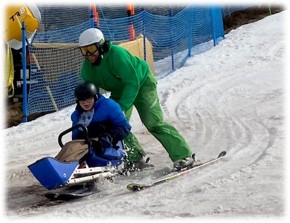
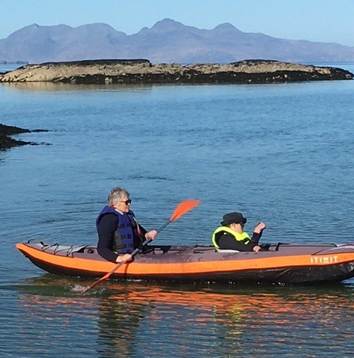
Darren is 16. He can ski, canoe, kayak and swim, and that is only a glimpse of the activities he loves. He is also a young person with profound and multiple learning disabilities who uses a wheelchair. For Darren, these things are not contradictions. With the right support, adaptations and people willing to think differently about what is possible, he has been able to take part in activities, develop new skills, build confidence and achieve goals that might once have been assumed to be out of reach.
As we celebrate 20 years of Getting it right for every child (GIRFEC) in 2026, we are highlighting real-life stories from across Scotland that demonstrate what GIRFEC can look like in practice. Through PAMIS, we were introduced to Darren and his mum and carer, Moira, who shared the story of his Duke of Edinburgh’s Award (DofE) journey with us. Darren’s experience is a powerful example of what can happen when children and young people are included and supported to achieve in ways that work for them.
Finding the right opportunity
Moira has cared for Darren since he was four years old, initially as his short-break carer. Darren has lived with Moira and her family full-time for the past XX years. As he grew older, they were looking for opportunities that would allow his love of the outdoors and adventure to continue to flourish. Darren had previously been involved with Scouts, but when that came to an end, they began looking for something new. Through PAMIS, they heard about the DofE Award setting up in Dundee at the Boomerang Community Centre and it felt like an opportunity worth exploring. For Darren, the appeal was clear. The DofE offered the chance to work towards goals, develop skills for now and the future, build confidence and, importantly, take part in activities he enjoyed. The question was not whether Darren could fit into the programme. It was: how could the programme be adapted so that Darren could take part? That distinction has been central to his experience.
Volunteering and finding a place in the community
Volunteering became a particularly important part of Darren’s journey to achieve his DofE Award. Darren got involved with the Sustainable Kirriemuir community garden, as well as taking part in charity blueberry-picking days. The response from the community was just as important as the opportunities themselves. The workers at Sustainable Kirriemuir embraced Darren and looked at ways he could meaningfully help out. Rather than seeing his wheelchair or communication needs as barriers to volunteering, they found ways for him to be involved and contribute. At the blueberry picking, Darren took on the role of rattling the charity bucket and encouraging donations for his school. It is not simply about making sure a young person can attend an activity. It is about creating opportunities for them to contribute, build relationships and develop a genuine sense of belonging. For Darren, volunteering has been about much more than completing a DofE requirement. It has helped him find his place within his community. Instead of only knowing Moira the community now know Darren in his own right, as a valued volunteer and part of our community.
Making it work for Darren
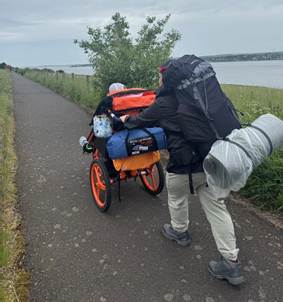
Inclusion for Darren, has meant thinking creatively about what he needs to participate and making adaptations that allow him to be involved in his own way. Moira often needs to know in advance what activities were planned and consider what adaptations might be needed, from seemingly small changes, such as making equipment easier for Darren to use, to bigger considerations around accessibility and outdoor expeditions. What made the biggest difference was that people were willing to listen, understand Darren’s needs and work with Moira to find solutions. Rather than seeing his disability as a reason not to participate, they asked: “What can we do to make this work?” That approach opened up opportunities for Darren and, in turn, challenged the way others thought about inclusion. Darren has also been supported by PAMIS to complete a Digital Passport. The passport records his achievements, but does much more than that. It provides an insight into Darren as a person, his interests, how he communicates, how others can best communicate with him, what support works for him and what matters to him. It helps people to see beyond a diagnosis or a wheelchair and understand the person they are meeting.
Listening differently
One of the strongest messages from Moira’s experience is that communication does not always look the way people expect it to. People can sometimes assume that because Darren is non-verbal, he cannot make choices for himself. Moira knows differently. She knows Darren well enough to recognise how he is feeling, what he likes and dislikes, and how he responds to different situations. They talk, consider options and make decisions together. Sometimes Darren’s choices are communicated through a reaction, an expression or a response rather than spoken words. Recognising these forms of communication has been an important part of supporting Darren to have a say in his own life. This is at the heart of GIRFEC: understanding what matters to the individual child or young person, listening to their views and strengths, and supporting them to be included in decisions about their own lives.
Changing perceptions
Perhaps one of the most significant impacts of Darren’s DofE journey has been the way it has challenged other people’s expectations. It took time for Darren and the other young people in the group to get to know one another. At first, they were strangers and did not necessarily acknowledge each other. It took four or five sessions for relationships to develop. This was not because Darren was unable to communicate. Everyone simply needed time to get to know one another. Once those relationships developed, the other young people became an important part of Darren’s experience. They practised supporting him with his wheelchair and, when it came to an expedition, they had already discussed how they could help. For Moira, their support meant more than simply making the expedition possible. She remembers being able to walk across a bridge holding Darren’s hand while the other young people pushed his wheelchair, a role she would normally carry out herself. It was a small moment, perhaps, but a hugely meaningful one. It demonstrated what genuine inclusion can look like: not simply making sure a young person is physically present, but creating opportunities for them to participate, build relationships and experience something alongside their peers.
A different kind of achievement
Darren’s DofE journey has not just been about completing activities or collecting achievements. It has been about inclusion, belonging and wellbeing. He has been able to be part of a group of young people who are not specifically participating because they have additional support needs. He is simply part of the group. He is taking part in activities that interest him, developing skills, spending time outdoors and working towards something alongside his peers. For parents and carers of children and young people with profound disabilities, opportunities such as the DofE can sometimes feel as though they are designed for someone else’s child. Moira’s message is simple: don’t be scared.
Getting it right for Darren
Darren’s story captures something fundamental about GIRFEC. It is about recognising that every child and young person is unique, understanding what matters to them, listening to their voice and working alongside them and their families to provide the right support at the right time. For disabled children and young people, that means making sure opportunities are genuinely accessible, rather than assuming they are not suitable. It means recognising different forms of communication, understanding interests and strengths, involving young people in decisions about their own lives and being willing to adapt. Most importantly, it means starting with the young person rather than the perceived limitations of their disability. Darren’s story shows what can happen when people do exactly that.
As we mark 20 years of GIRFEC, his experience is a powerful reminder that getting it right for every child means exactly that, every child.
End of page.
You may also like:
LGBT Youth Scotland’s Smash Up experiences of wellbeing in school/college.
Continue readingOur film takes a look at the creative ways which CHAS engages with their children and young people.
Continue readingThe health and wellbeing of children and young people lies at the heart of the work of Children's Health Scotland.
Continue readingHelping children develop their emotional language, understand themselves and their social relationships, take ownership of their wellbeing.
Continue readingOur SHANARRI School aims to create a holistic approach to wellbeing in Highland's schools,
Continue readingOur Children and Young People Programme recently visited Kelso High School’s S1 Social Skills Group which supports neurodiversity.
Continue readingThe ALLIANCE's Children and Young People Programme made a visit to Kelso High School recently.
Continue reading