
Actions on women’s health should not be shouldered by women alone
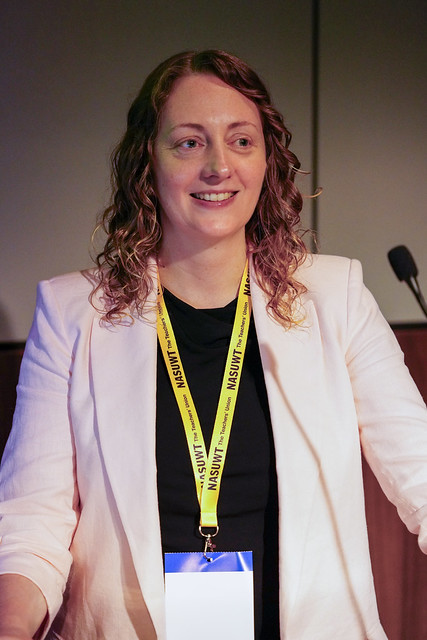
- Written by: Tara Lillis — — STUC Women's Committee
- Published: 4th February 2026

The ALLIANCE’s Women’s Health Lived Experience Group reflect on their input to Phase 2 of the Scottish Government’s Women’s Health Plan.
I am currently the chair of the STUC Women’s Committee, which leads on campaigns and policy for women trade union members in Scotland. Every year motions are brought to our Conference which cover the key health priorities of women in the workplace, across a wide variety of industries, both private and public sector. The Committee has lobbied government and employers to facilitate change and to ensure women workers can see experiences reflected and addressed in the Women’s Health Plan.
This year I joined the Lived Experience Group for the first time, bringing my knowledge of campaigning with the STUC Women’s committee, my own experience of women’s health at work, and nearly two decades of work supporting teachers as a trade union official.
The health and wellbeing of women is inextricably linked to their workplace. Progressive terms and conditions and workplace policies can be essential supports for our health and for women’s equality. Yet, women continue to experience discrimination and inequality both in their jobs and across their communities including continuing to carry the disproportionate burden of unpaid care – and all of this of course impacts on women’s health and it impacts in an intersectional way, with individual circumstances and protected characteristics coming together to create compound disadvantage.
At the in-person development day of the Women’s Health Plan Lived Experience Group it was really empowering to be among so many women who were committed to campaign and advocate for women’s health using their lived experience as a driver for change.
Centring the voice of lived experience is critical, however we must ensure ownership of the actions are not solely shouldered by women: women campaigners, women healthcare workers, women workers in the civil service. Where women continue to carry all the work of campaigning, lobbying and building for change, they are of course placing their own wellbeing and health at risk: this is why actions to tackle women’s health must be undertaken in tandem with broader actions to secure gender equality at work, at home and in society.
We also must look to support the women of the future. Coming from a teachers’ trade union, it should be no surprise the value I attribute to education and the importance it plays for us as a society in dispelling myths and tackling mis-information, particularly around health.
My hope for the future of Scotland’s Women’s Health Plan is to see the role of workplaces and employers fully recognised, with national accountability to ensure every woman can feel safe and supported with her health at work.

End of page.
You may also like:
Wellbeing Scotland’s Chief Clinical Officer Ashleigh Ronald highlights why we must shift stigmatising narratives around child abuse.
Continue readingAs we mark twenty years of the ALLIANCE, Person Centred Voices continues to show the power of listening, kindness and connection.
Continue readingThe ALLIANCE’s Women’s Health Lived Experience Group reflect on their input to Phase 2 of the Scottish Government’s Women’s Health Plan.
Continue readingThe ALLIANCE’s Women’s Health Lived Experience Group reflect on their input to Phase 2 of the Scottish Government’s Women’s Health Plan.
Continue readingThe ALLIANCE’s Women’s Health Lived Experience Group reflect on their input to Phase 2 of the Scottish Government’s Women’s Health Plan.
Continue readingThe ALLIANCE’s Women’s Health Lived Experience Group reflect on their input to Phase 2 of the Scottish Government’s Women’s Health Plan.
Continue readingIn her latest TFN column, our Chief Officer Sara Redmond marks 20 years of the ALLIANCE and looks ahead to a future built on hope.
Continue readingOur Chief Officer Sara Redmond reflects on hope, action and why human rights must remain at the heart of how we shape the future.
Continue readingAs Phase 2 is launched, Dr. Irene Oldfather shares her reflections on how the ALLIANCE has contributed to the Women's Health Plan.
Continue readingThe ALLIANCE’s Women’s Health Lived Experience Group reflect on their input to Phase 2 of the Scottish Government’s Women’s Health Plan.
Continue readingThe ALLIANCE’s Women’s Health Lived Experience Group reflect on their input to Phase 2 of the Scottish Government’s Women’s Health Plan.
Continue readingThe ALLIANCE’s Women’s Health Lived Experience Group reflect on their input to Phase 2 of the Scottish Government’s Women’s Health Plan.
Continue readingThe somatic approach, from Louise Davidson, host of the Self Management Week event ‘Calm the Storm: Movement & Breath to Lower Cortisol’.
Continue readingAs we enter the new year, 2026 is an important milestone for the ALLIANCE; it is our 20 year anniversary.
Continue readingReflections on the role of peer support for women’s health in Scotland
Continue readingDr Rebekah Ballantyne, a speaker at the Self Management Week 2025 webinar ‘IFIC: What I need to lead’, shares her self management insights.
Continue readingLucy reflects on what’s needed to progress rights in Scotland.
Continue readingIn her latest TFN column, our Chief Officer Sara Redmond explores how Scotland can move from coping to truly thriving.
Continue readingIn this part two of two opinion pieces, Satya Dunning offers us ideas for healthy eating and lifestyle habits during the colder months.
Continue readingIn this part one of two opinion pieces, Satya Dunning reflects on nutrition as part of self management during the colder months.
Continue readingWhy working together, not against, is key to creating a digitally included society.
Continue readingIn her latest TFN column, our Chief Officer Sara Redmond shares her thoughts on hope being a much needed tool in building change that lasts.
Continue readingJane shares a new resource which explores good practice examples of rights-based decision-making.
Continue readingDr Hannah Tweed discusses the inclusive communications campaign the ALLIANCE launched in early 2025, and how you can get involved.
Continue readingCarola, disability and mental health advocate, shares her thoughts on the current state of mental health services in Scotland.
Continue reading