
We Won’t Wait – Parkinson’s public fundraising campaign
- Written by: Katherine Crawford — Parkinson's UK — Scotland Director
- Published: 10th April 2017
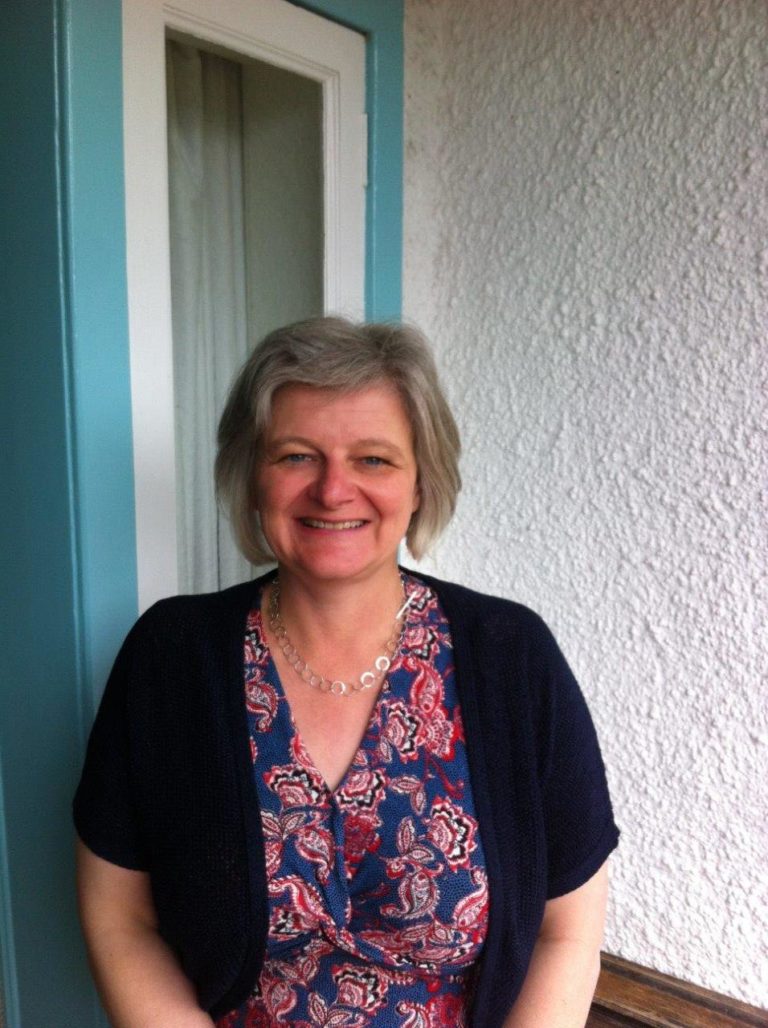
The frustration that led to Parkinson's UK launching its first public fundraising campaign.
This year Parkinson’s Awareness Week (10-16 April) marks two milestones. It was exactly 200 years ago that James Parkinson first identified the condition in his ‘Essay on the Shaking Palsy’. And it was 50 years ago that the last major breakthrough in Parkinson’s medication was made with the arrival of levodopa.
But these anniversaries are no cause for celebration. 200 years on 11,000 people with Parkinson’s in Scotland are still waiting for an effective treatment that tackles the condition head on. And it’s unacceptable that 50 years after levodopa people with Parkinson’s continue to struggle to do the simple things that most of us take for granted.
Parkinson’s can fluctuate dramatically too with symptoms varying day by day and even hour by hour. People with Parkinson’s often experience tremor, slowness of movement and rigidity. Other less common symptoms include tiredness, insomnia, pain, nausea, loss of balance and constipation.
But that’s not the whole story because Parkinson’s affects almost every area of a person’s life. As well as the physical symptoms people with Parkinson’s can also have a range of ‘hidden’ symptoms including anxiety, depression, hallucinations and mental health problems.
The slow progress towards new treatments is just not good enough and Parkinson’s UK is today saying we won’t wait any longer.
The We Won’t Wait campaign aims to deliver better treatments in years not decades. Current drugs for Parkinson’s don’t stop the condition from getting worse – they only paper over the cracks by masking the symptoms. And all too often the treatments have distressing side effects.
Decades of research has deepened our understanding of Parkinson’s. We’ve discovered two of the most important genes linked to the condition and have identified drugs that are already in use for other illnesses that show great promise for Parkinson’s.
We believe the science is ready for those discoveries to leave the lab and be turned into life-changing treatments. We’re convinced that new and effective treatments are within our grasp and we’re ready to drive forward the research community in a radical new approach to develop better treatments, faster.
We want to encourage better leadership that brings the best ideas together to accelerate the journey towards better treatments and ultimately a cure.
People with Parkinson’s describe the condition as taking away a little piece of them every day and are hugely concerned about the affects it has on their families. We want to change that and we want this to be the last generation of people with Parkinson’s in Scotland who face an uncertain future knowing that their condition will never improve.
They don’t want to wait any longer for better treatments. And nor should they. But we can’t do this alone. That’s why we’re urgently asking people to donate whatever they can to support our vital research. We can’t stand by and let Parkinson’s treatments fall further behind.
To donate or find out more about the We Won’t Wait campaign visit www.wewontwait.parkinsons.org.uk.
End of page.
You may also like:
With the ALISS Customisable Map Tool, organisations can share info about community resources in ways that work for the people they support.
Continue readingIrene Mackintosh, CEO at Mhor Collective shares highlights and hopes for rights in a digital age.
Continue readingIn her latest TFN column, our Chief Officer Sara Redmond reflects on the proposal to collapse Scotland's 14 regional health boards into two.
Continue readingWhen we listen to lived experience, we create better resources, challenge assumptions and help create safer communities for everyone.
Continue readingGozie reflects on supporting citizen engagement, digital inclusion and hopes for the future.
Continue readingDCP member and Project Co-ordinator Esther Misajel shares Pachedu's journey towards digital inclusion.
Continue readingChris Mackie, Director of Digital, reflects on what ALISS has achieved so far this year and shares what is still to come.
Continue readingAt the ALLIANCE and beyond, true and meaningful policy reform means turning people's experiences into lasting action on the ground.
Continue readingGLP-1s can transform health but without adequate wraparound support, weight loss may come at the cost of nutrition, muscle and wellbeing.
Continue readingSheila Duffy, Chief Executive of ASH Scotland, is appealing for support for proposals to restrict tobacco, vapes and nicotine products.
Continue readingBilly McClean reflects on why SCIC26 offers a vital opportunity to learn together, share what works, and shape the future of integrated care
Continue readingTo mark the ALLIANCE's 20 year anniversary Paul Okroj reflects on the importance of supported self management.
Continue readingTo mark Scottish Learning Disability Week (7 - 13 September), Bruce Adamson reflects on this year's call to action.
Continue readingIn her latest TFN column, our Chief Officer Sara Redmond reflects on the current state of social care in Scotland.
Continue readingKicking off September for the ALLIANCE's 20 year anniversary, Grace reflects on the Self Management Programme
Continue readingSara Redmond, ALLIANCE Chief Officer, on the priorities for 2026's Programme for Government.
Continue readingSandra Auld reflects on the ALLIANCE's people focused impact, collaboration, lived experience, campaigns and lasting change in Scotland.
Continue readingMark shares his experience with gambling harms, and how this intersected with the launch of the ALLIANCE's ScotRGH programme in 2020.
Continue readingProfessor Anna Glasier celebrates 20 years of the ALLIANCE and it's vital role in shaping the Women's Health Plan for Scotland.
Continue readingSara Redmond, ALLIANCE Chief Officer, on the challenges faced by community-led health organisations in delivering prevention.
Continue readingAnnie shares her experience of youth politics, and how SAFE has helped her make connections and makes sense of the world of politics.
Continue readingChloe Craig reflects on how we have helped connect Scotland’s lived experience voice to conversations happening beyond our borders.
Continue readingDr Irene Oldfather reflects on two decades of growth, collaboration, and person centred impact across Scotland and beyond.
Continue readingDisabled people are some of those who suffer most in crises but are ignored in planning. Our 6-step model builds justice throughout.
Continue readingMaisie Peebles shares her experience working with Aberdeenshire Public Health Team on a ‘digital conversations’ project.
Continue reading