
The parallel lives we lead
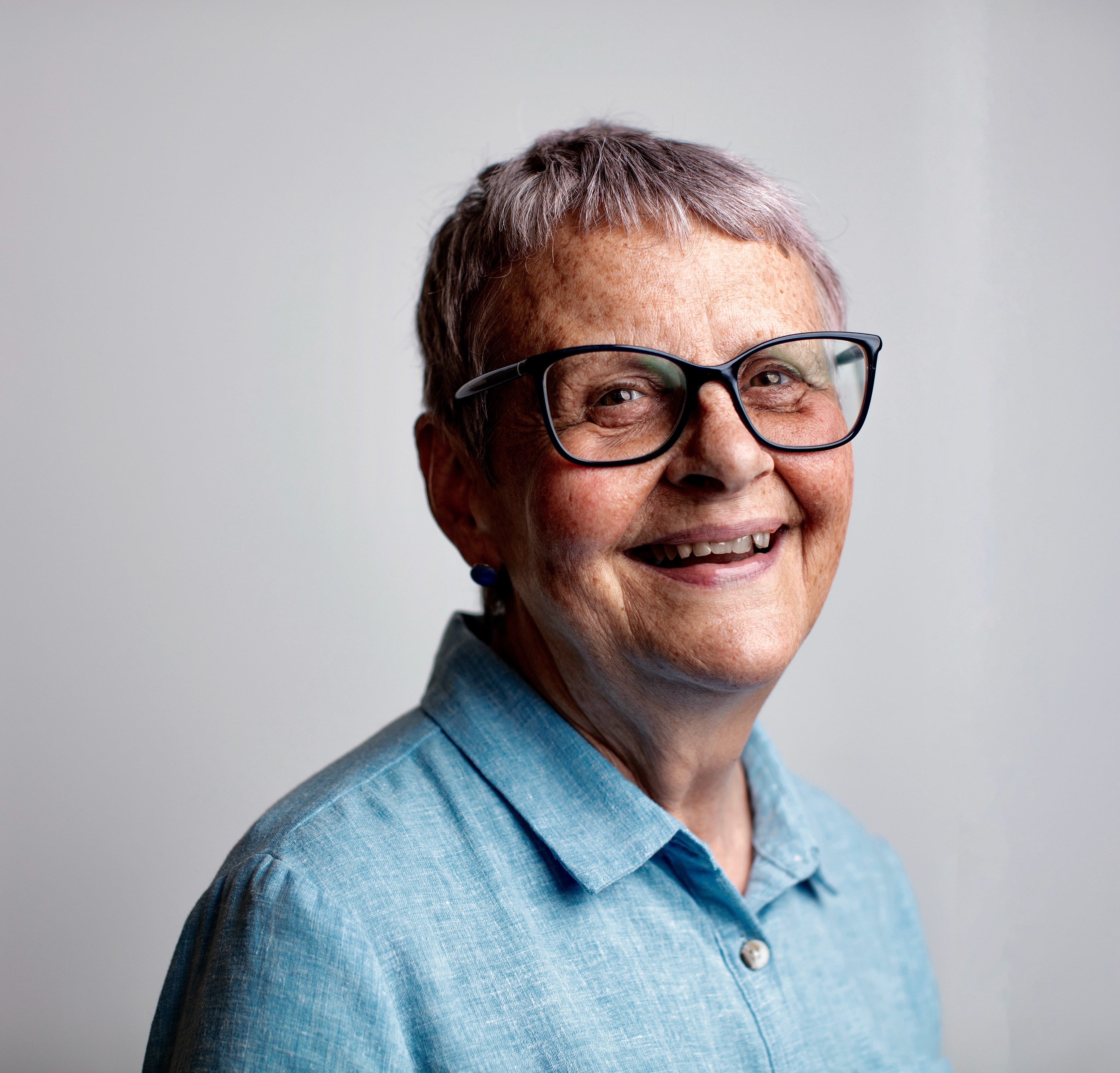
- Written by: Wendy Mitchell — Bestselling author of 'Somebody I Used to Know'
- Published: 4th November 2019
Wendy Mitchell shares her views on the importance of strong communication as she reflects on relationships and dementia.
When I got my diagnosis in July 2014, it wasn’t just me who had to come to terms with this bummer of a diagnosis. It’s not just ours to deal with, but a diagnosis for all those around us who support us. It might be a wife, a husband, a friend, a relative; for me, it was my daughters.
So why do services so often see it as a ‘carers issue?’ So often in the past, there’s been a focus on the needs of the carers and only in the last few years since the birth of the DEEP Network have people with dementia themselves been given a voice. I believe once we get a diagnosis, we live parallel lives, both equally important but with different needs, different viewpoints but both need to be understood by the other.
Me and my daughters learnt very early on the importance of talking. If you don’t talk about how you feel and the problems you’re having while you’re still able, how can you ensure what happens now or later, when you can’t communicate? But it must be two-way communication. I’m still a mum so need to know what’s worrying my daughters as much as they need to know how they can help me. I hadn’t realised they were worried about me travelling alone, until we talked. The tables had turned, and they were now waiting for me to put the key in the lock instead. Once we’d talked about it, we could find a solution, that solution being that they now track me. They feel safe knowing where I am and I feel safe knowing that if I get lost, I can ask them where I am.
Many families or couples have never spoken about personal issues, so they now find they’re playing ‘guess the problem’ and often creating new ones from not talking.
Professionals can help families like mine learn how to talk, because many people just don’t know how. Maybe for them, having difficult conversations with patients is hard. If it’s difficult for them in their position, imagine what it’s like when you don’t have that professional knowledge of what’s going on.
I met a couple one day and the man, living with dementia, said that he never told his wife how he was feeling because he didn’t want to upset her. I asked him ‘how would she know how to help you if you don’t tell her what you’re finding difficult?’ He hadn’t thought of it from that perspective. He hadn’t thought how she might be confused why he’s behaving in a certain way and how she might be able to make it easier. For the kindest of reasons, he didn’t talk to her and she didn’t talk to him.
Showing families all sides of the story is so important to help them to be open and not be afraid of talking as so many people are. So maybe the answer is to bring both groups together and allow their parallel lives to meet for a moment?
My support group in York, Minds and Voices, recently ran our second 6 week “Good Life with Dementia” course, designed and delivered by people living with dementia. Couples came as well as those living alone. At the end, one couple shared: “We’ve learnt more from listening and talking during these last few weeks than from anything we’ve read or been told…”
Evidently, actively listening to both sides of the story helps understand the challenges being faced on both sides of these parallel lines; this can only be achieved through communication.
End of page.
You may also like:
To mark ‘What matters to you?’ Day, The ALLIANCE's Barbara Flynn considers the impact of Tommy Whitelaw’s talks for nurses and midwives.
Continue readingThe ALLIANCE’s Humans of Scotland project works to challenge stigma.
Continue readingIn her latest TFN column, our Chief Officer Sara Redmond reflects on post election feelings and Scotland’s future.
Continue readingALLIANCE Chief Officer, Sara Redmond, reflects on our Annual Conference 2026 and how we're turning hope into action.
Continue readingALLIANCE member, Catherine, shares the importance of initiatives like 'What Matters To You?' Day in promoting person centred care.
Continue readingLearn about how the ALLIANCE has championed joined-up, person centred care.
Continue readingDementia Action Week highlighted some great resources and support for people living with dementia and their family, friends, and carers.
Continue readingSteven Mair gives us an insight into his role as a gamer at the Glasgow Children’s Hospital Charity.
Continue readingSince 2009, ALISS has helped people find local health and wellbeing support. Any group, big or small, can add their information.
Continue readingThe new Scottish Government must turn promises into action to improve hospice and palliative care
Continue readingTogether, we can create lasting change for everyone living with Crohn’s or Colitis.
Continue readingFind out more about these digital self management tools and how to get in touch to arrange an information session.
Continue readingOur Chief Officer Sara Redmond addresses recent commentary on the relationship between Government and the Third Sector.
Continue readingCornell explores how we can build an environmental human rights-based culture
Continue readingLouise Coupland, Digital Health and Social Care Programme Manager shares her opinions on the national roll out of MyCare.scot.
Continue readingChris Mackie, Director of Digital, looks back at how ALISS has developed, grown, and innovated over time.
Continue readingCrohn’s and Colitis care in Scotland is at a pivotal moment. Urgent action is needed to tackle delays and poor access to vital services
Continue readingThe ALLIANCE’s Lewis Shaw reflects on the importance of rehabilitation support.
Continue readingIsabella Goldie of Deafblind Scotland reflects on the value of partnership work.
Continue readingFind out more about the inaugural Power of Attorney Day taking place on 22 April 2026.
Continue readingDr Hannah Tweed reflects on 20 years of the Scottish Sensory Hub, the important work they do and why it matters.
Continue readingAs part of our 20 year anniversary, Kerry shares her reflections on how far the ALLIANCE has come, our achievements, and our impact.
Continue readingIn her latest TFN column, our Chief Officer Sara Redmond reflects on 20 years since Scotland moved to put children at the centre of policy.
Continue readingCancer care in Scotland is at a critical moment. Macmillan is calling for urgent action ahead of the parliamentary elections in May
Continue readingMhairi Campbell reflects on Premenstrual Dysphoric Disorder (PMDD) not being recognised as having a severe impact on life.
Continue reading