
So your child’s tooth gets knocked out during lockdown…
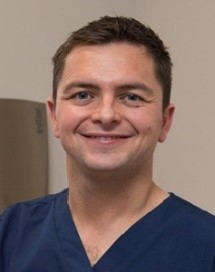
- Written by: Dr. Paul Cooney — L & H Dentalcare — BDS, MSc, FFGDP (UK), MFDS RCSGlasgow
- Published: 19th May 2020

Paul shares advice on dental care and what to do in dental emergencies now surgeries are temporarily closed.
The call came at 2:42pm on a Tuesday afternoon during the nation’s 5th week of “lockdown” in the fight against COVID-19. I had just finished a late lunch after a busy morning and any thoughts I’d had of a quiet afternoon were soon forgotten, as the voice at the other end of the phone informed me that her 9 year old son had fallen and knocked out his top front adult tooth at his local school. He needed emergency dental care and as his dentist I had to think and act quickly.
The only problem was that all dental practices had been temporarily closed four weeks previously and I would not be able to provide that care myself: instead, I would need to coordinate this emergency and it’s a dental knock out in lockdown and a concerted effort to successfully negotiate the steps required to re-implant the tooth.
If an adult tooth is knocked out, the key steps are:
- Stay calm (take 3 deep breaths!)
- Find the tooth ( take another 3 deep breaths!)
- Reinsert the tooth into position ( if possible, do this immediately- don’t wait for the dentist!)
- Hold it by the crown ( the white bit that sticks out of the gum)
- Make sure the whole tooth is clean: you can rinse it in water if you have to (or even lick it)
- Put it into position ( the flat side of the crown is at the front)
- Bite on a handkerchief to hold the tooth in place
- Seek emergency dental treatment within 2 hours.
- Good oral hygiene is essential in the healing period.
Due to the quick thinking of the child’s teachers, the fortitude of his mother and the new COVID-19 dental emergency protocols, we were able to ensure a successful outcome. First of all, the school teachers found the tooth and placed it in a glass of milk. This is good practice as milk helps to preserve
Over the telephone, I had to establish a few key facts about his overall status: had he lost consciousness, had he vomited since in the fall, or was he experiencing any uncontrolled bleeding? Having established that he hadn’t suffered a head injury (a head injury would necessitate medical attention), I talked the child’s mum through the steps required to place the tooth back into her son’s jaw. She did what was required-gold medal for mum!
He was then seen by a dentist at a local Urgent Dental Centre to secure the tooth in place. These hubs have been set up to help patients with dental emergencies while dental practices are closed due to lockdown.
This was a well co-ordinated approach between the child’s teachers, his mum and the dental professionals. Please note that you NEVER try to re-implant a baby tooth that has been knocked out due to the high risk of damaging the underlying adult tooth.
So if an adult tooth is knocked out, don’t panic- all is not lost, as long as the tooth is found. Follow these steps and phone your dentist, or phone NHS 24 on 111 out of hours for professional advice- lockdown or no lockdown.
More information on dental trauma can be found here: https://www.iadt-dentaltrauma.org/for-patients.html (this link will take you away from our website)
End of page.
You may also like:
To mark ‘What matters to you?’ Day, The ALLIANCE's Barbara Flynn considers the impact of Tommy Whitelaw’s talks for nurses and midwives.
Continue readingThe ALLIANCE’s Humans of Scotland project works to challenge stigma.
Continue readingIn her latest TFN column, our Chief Officer Sara Redmond reflects on post election feelings and Scotland’s future.
Continue readingALLIANCE Chief Officer, Sara Redmond, reflects on our Annual Conference 2026 and how we're turning hope into action.
Continue readingALLIANCE member, Catherine, shares the importance of initiatives like 'What Matters To You?' Day in promoting person centred care.
Continue readingLearn about how the ALLIANCE has championed joined-up, person centred care.
Continue readingDementia Action Week highlighted some great resources and support for people living with dementia and their family, friends, and carers.
Continue readingSteven Mair gives us an insight into his role as a gamer at the Glasgow Children’s Hospital Charity.
Continue readingSince 2009, ALISS has helped people find local health and wellbeing support. Any group, big or small, can add their information.
Continue readingThe new Scottish Government must turn promises into action to improve hospice and palliative care
Continue readingTogether, we can create lasting change for everyone living with Crohn’s or Colitis.
Continue readingFind out more about these digital self management tools and how to get in touch to arrange an information session.
Continue readingOur Chief Officer Sara Redmond addresses recent commentary on the relationship between Government and the Third Sector.
Continue readingCornell explores how we can build an environmental human rights-based culture
Continue readingLouise Coupland, Digital Health and Social Care Programme Manager shares her opinions on the national roll out of MyCare.scot.
Continue readingChris Mackie, Director of Digital, looks back at how ALISS has developed, grown, and innovated over time.
Continue readingCrohn’s and Colitis care in Scotland is at a pivotal moment. Urgent action is needed to tackle delays and poor access to vital services
Continue readingThe ALLIANCE’s Lewis Shaw reflects on the importance of rehabilitation support.
Continue readingIsabella Goldie of Deafblind Scotland reflects on the value of partnership work.
Continue readingFind out more about the inaugural Power of Attorney Day taking place on 22 April 2026.
Continue readingDr Hannah Tweed reflects on 20 years of the Scottish Sensory Hub, the important work they do and why it matters.
Continue readingAs part of our 20 year anniversary, Kerry shares her reflections on how far the ALLIANCE has come, our achievements, and our impact.
Continue readingIn her latest TFN column, our Chief Officer Sara Redmond reflects on 20 years since Scotland moved to put children at the centre of policy.
Continue readingCancer care in Scotland is at a critical moment. Macmillan is calling for urgent action ahead of the parliamentary elections in May
Continue readingMhairi Campbell reflects on Premenstrual Dysphoric Disorder (PMDD) not being recognised as having a severe impact on life.
Continue reading