
How lived experience affects the personal and professional
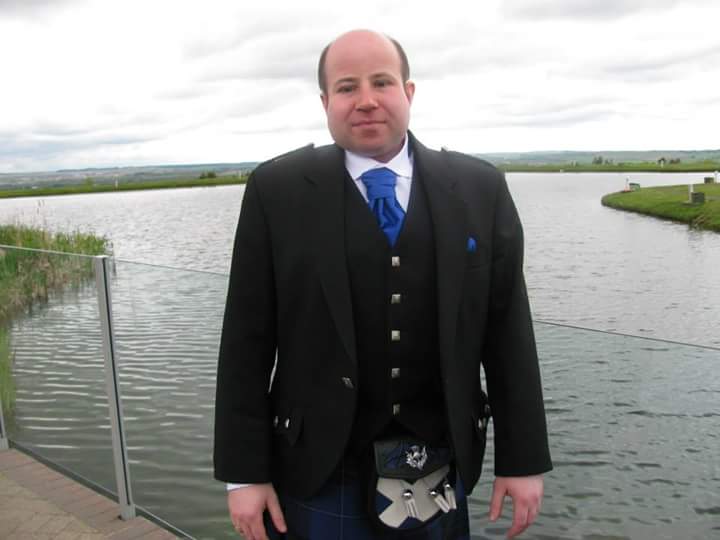
- Written by: David Howie — — MSc Student
- Published: 16th September 2020

David reflects on his experience of higher education and how his academic journey has helped him find his path and increase his confidence.
When I returned to higher education in 2014 at the young age of thirty-one, the plan was not to get my MSc by 2020. The goal was to find “the self” and to get back on the path forward. The world had beat me to my knees. It would have kept me there permanently if I had let it. I required a project – something to focus my mind. I chose to study Politics, Philosophy and Economics with the Open University for three reasons: (1) I had joined a UK political party that same year therefore understanding the UK political framework was essential, as my objective was to use politics to improve the lives of people with disabilities, (2) I felt that I had completed the wrong undergraduate degree and the opportunity to study part-time, for free with a Scottish Government grant was a fantastic opportunity and (3) I required a hand to get back on the path and the Open University held out that hand in 2014.
The Open University
The structure of the Open University is significantly different from what Open University students call ‘brick universities.’ The Open University has three levels: the requirements for passing each level is to complete two modules (120 credits). As the Scottish Government was covering costs for my second undergraduate degree, I decided to complete all 360 credits. That was possibly my first mistake or at least my first perceived mistake. I had a preconception that I was going to be studying Politics, Philosophy and Economics from day one. Instead, my first 120 credits with the Open University taught ‘Introducing the Social Sciences.’ Reading the two books affiliated with ‘Introducing the Social Sciences,’ now, it is easy to see just how well written and edited the Open University books are. Back in 2014/15, my “synaptic self” (my brain), however, struggled to understand the importance of studying the infrastructure and institutions and how infrastructure and institutions provide an understanding of “place” and the politics which govern that place.
Due to living with the long term side effects of a childhood brain tumour and stroke, my brain takes longer to process the data (what the mind sees and hears) and turn the data into knowledge. I remember one of my tutors during my first 120 credits with the Open University suggesting “I don’t write the way I speak.” My younger brother always reinforced the thinking that one’s writing will be more legible and flow better if the “writing flows the same as speech.” In academic writing, that is a point which is not possible to ‘over-emphasise.’
Why my marks do not reflect my understanding
The main reasons why my module marks did not reflect my understanding of the subject area is due to the vastness of the subject area. To clarify that point, what content an essay can contain is dependent upon the word constraint. For example, I wish to keep this article under 1000 words. Therefore, there is a restriction on the information I can provide. However, with regards to academic writing, I try to say too much, which resulted in critical areas of the essay not been, defined, developed and discussed. Many of you may not have had a brain tumour, stroke or may not identify as disabled, therefore, the reaction to what I said above could receive the dismissive view that that is common knowledge. Common knowledge for someone that has not had a brain tumour or stroke, perhaps. For me, however, it has taken six years to grasp that point entirely.
Glasgow Caledonian University: My MSc
I write this article, as I wait for confirmation that I have passed my re-sit and can therefore complete my dissertation. It is ironic but failing parts of the modules which prevented me from handing in my dissertation this month could have been the best thing that happened. Failing and the COVID-19 pandemic has helped me reflect on how I see myself and my professional identity. I should make it clear that I had help and a lot of feedforward from lecturers over the re-sit time-frame for which I am grateful. The point I want to make clear more generally is that during the re-sit period, I was encouraged to embrace my disability and to see my lived experiences as part of my professional identity. This is the most important thing I will take away from my six years of higher education. And I hope the most important thing you will take away from reading this is this – lived experiences matter. My lived experiences shaped me as an individual, lived experiences also shaped my professional identity, which I want all of society to see.
My MSc has provided me with a lot of self-confidence. I feel as if I can now communicate my ideas in a way which are readable and straightforward to understand. If there is a criticism I have, though, it is I feel as though to be accepted as an academic, I have had to give up a lot of thoughts to give my writing legitimacy. This requires more research and society cannot change because social norms will not let it. But social norms will not change if no one will challenge them.
To conclude, I want to remind you that my academic journey was my way to find my path and move forward with life. If you have lost your way, I suggest doing something which makes you happy. You will never know, the road ahead may just find you.
End of page.
You may also like:
To mark ‘What matters to you?’ Day, The ALLIANCE's Barbara Flynn considers the impact of Tommy Whitelaw’s talks for nurses and midwives.
Continue readingThe ALLIANCE’s Humans of Scotland project works to challenge stigma.
Continue readingIn her latest TFN column, our Chief Officer Sara Redmond reflects on post election feelings and Scotland’s future.
Continue readingALLIANCE Chief Officer, Sara Redmond, reflects on our Annual Conference 2026 and how we're turning hope into action.
Continue readingALLIANCE member, Catherine, shares the importance of initiatives like 'What Matters To You?' Day in promoting person centred care.
Continue readingLearn about how the ALLIANCE has championed joined-up, person centred care.
Continue readingDementia Action Week highlighted some great resources and support for people living with dementia and their family, friends, and carers.
Continue readingSteven Mair gives us an insight into his role as a gamer at the Glasgow Children’s Hospital Charity.
Continue readingSince 2009, ALISS has helped people find local health and wellbeing support. Any group, big or small, can add their information.
Continue readingThe new Scottish Government must turn promises into action to improve hospice and palliative care
Continue readingTogether, we can create lasting change for everyone living with Crohn’s or Colitis.
Continue readingFind out more about these digital self management tools and how to get in touch to arrange an information session.
Continue readingOur Chief Officer Sara Redmond addresses recent commentary on the relationship between Government and the Third Sector.
Continue readingCornell explores how we can build an environmental human rights-based culture
Continue readingLouise Coupland, Digital Health and Social Care Programme Manager shares her opinions on the national roll out of MyCare.scot.
Continue readingChris Mackie, Director of Digital, looks back at how ALISS has developed, grown, and innovated over time.
Continue readingCrohn’s and Colitis care in Scotland is at a pivotal moment. Urgent action is needed to tackle delays and poor access to vital services
Continue readingThe ALLIANCE’s Lewis Shaw reflects on the importance of rehabilitation support.
Continue readingIsabella Goldie of Deafblind Scotland reflects on the value of partnership work.
Continue readingFind out more about the inaugural Power of Attorney Day taking place on 22 April 2026.
Continue readingDr Hannah Tweed reflects on 20 years of the Scottish Sensory Hub, the important work they do and why it matters.
Continue readingAs part of our 20 year anniversary, Kerry shares her reflections on how far the ALLIANCE has come, our achievements, and our impact.
Continue readingIn her latest TFN column, our Chief Officer Sara Redmond reflects on 20 years since Scotland moved to put children at the centre of policy.
Continue readingCancer care in Scotland is at a critical moment. Macmillan is calling for urgent action ahead of the parliamentary elections in May
Continue readingMhairi Campbell reflects on Premenstrual Dysphoric Disorder (PMDD) not being recognised as having a severe impact on life.
Continue reading