
Eat Sleep Ride: Connecting Communities through intergenerational volunteering
“Our integration is built into how we operate, not bolted on as a reporting requirement.”
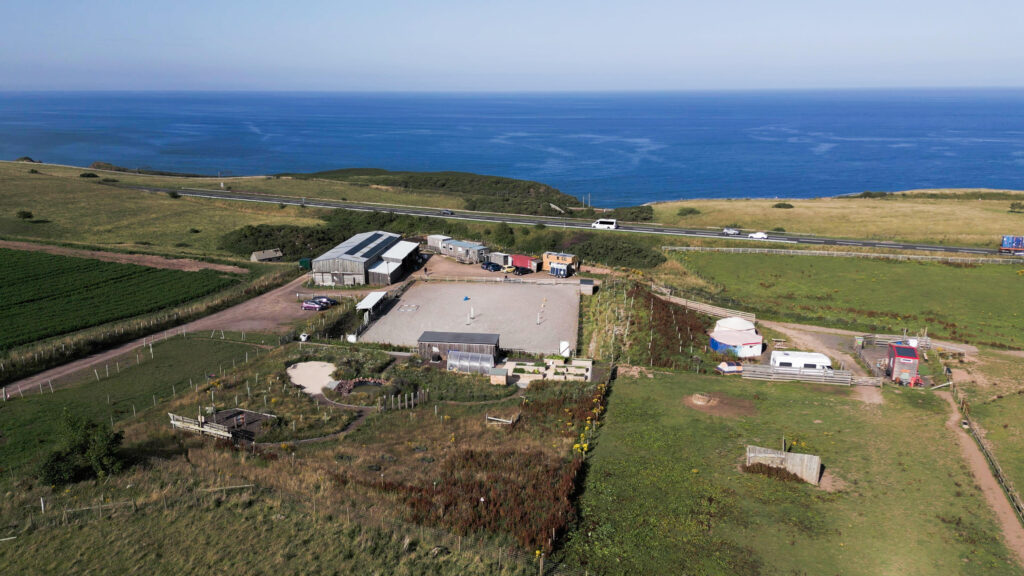
Eat Sleep Ride is a Scottish charity based on a reclaimed, off-grid, solar-powered rural site in East Berwickshire, working with rescued horses, young people, isolated adults and nature to create learning that is relational, ethical and grounded in real responsibility. Many of the individuals and families they support are living in poverty, so addressing this is fundamental to who they are and sits at the heart of their work. Their programmes include youth leadership and awards, peer mentoring, equestrian pathways, intergenerational volunteering, Empower Her for women and girls experiencing isolation or stress, Herd Dynamics leadership development for organisations, and a free weekly Youth Club, with free and subsidised sessions available where cost would otherwise be a barrier. They also employ young people directly through paid roles with liveable, flexible hours, and are an approved apprenticeship centre for the Scottish Racing Academy with Association of British Riding Schools accreditation.
Danielle, founding Director of Eat Sleep Ride, shared “Our integration is built into how we operate, not bolted on as a reporting requirement. We give communities a genuine voice through ongoing consultation, with programmes shaped and led by the young people and families we serve.” They work collaboratively with a wide network including Youth Borders and Youth UK, Social Enterprise Scotland and Borders Community Action, as well as contributing to research and consultation work with the Scottish Racism Observatory, Creating Hope Together (mental health and community resilience research), and suicide prevention strategy discussions.
Intergenerational volunteering at Eat Sleep Ride is how they connect communities and bring people together – it is in the fabric of how they operate. Through horse care, land based learning, community growing, environmental projects, and event delivery, young volunteers, aged 13 – 18, work alongside adult and older community members, sharing skills and building relationships while contributing to something real. In 2025 they welcomed 11 young volunteers and 17 adult volunteers, with many young people moving into paid roles, leadership, and formal accreditation through their Youth Leadership and Awards Pathway, including coaching, animal behaviour, and equine care. This is now being strengthened through a new, structured youth programme – developed with support from Just Enterprise and Inspire Alba and informed by their international coaching team – giving their pathway a formal, recovery informed, trauma aware framework as it launches.
They also run an equine inspired development programme, Herd Dynamics, delivered by a team of registered trauma counsellors and neurodiversity specialists working nationally and internationally. Drawing on the natural dynamics of a horse herd, the programme invites organisations, teams, and leaders to experience leadership as something embodied, relational, and shared – rather than hierarchical – all delivered on site alongside the horses. Danielle says “it is not a corporate away day, it is a genuine learning experience that has shifted how leaders understand trust, communication, and their own presence. We are actively bringing this offer to statutory and third sector organisations across Scotland and beyond, because we believe the same principles that help a young person in crisis belong in every boardroom and team meeting too.”
Their greatest challenge, Danielle shares, “is not the communities we work with – it is infrastructure that cuts off the relationships we build. Compliance requirements divert us from direct work. Funding windows close before the relational work has landed. And in a rural border community with no bus and no drop in, the people who most need us are already doing the most just to get here.” They have learned to trust the infrastructure. When organisations come to where communities already are, that is when integration actually happens and that is what they are trying to demonstrate at Quarry Farm.
Looking to the future, they are launching a new youth programme, deepening their creative and ecological partnerships and continuing to grow their free community offer. “The vision is a rural site that is not just a programme venue but a living, breathing community resource, accessible to all, rooted in nature, and open to south east Scotland and across the border into Northumberland. We want to be properly resourced as part of the integrated landscape of health and social care in Scotland. The infrastructure is being built. The relationships are here. The work is already happening.”
Learn more about the work of Eat Sleep Ride via this link.
You can read all Connected Communities case studies here: https://www.alliance-scotland.org.uk/blog/case_studies/?projects=connected-communities.
End of page.
You may also like:
Highlighting real-life stories that demonstrate what GIRFEC can look like in practice.
Continue reading“Working collaboratively has increased the value of what we offer and made our message that much stronger.”
Continue reading"Decisions are made collaboratively, in the best interest of child and family, ensuring clinical safety."
Continue reading"Working in collaboration with local people is the most viable way of ensuring that we are focusing on the outcomes that really matter."
Continue reading"Lingo Flamingo run language learning projects in care homes and day centres to enhance the wellbeing of marginalised adults in care."
Continue readingNicola Cooper, Head of Digital Futures at Scottish Care, taking stock on our 20th Anniversary.
Continue reading“Set clear goals, communicate openly, stay flexible, and keep learning. Success comes from collaboration and continuous improvement!”
Continue reading"By sharing learning, resources and local knowledge, we aim to grow in a way that is sustainable, flexible & responsive to local priorities"
Continue reading“This project has amplified how important the power of connection is."
Continue reading"This is a unique opportunity to lead Scotland into a new era care model benefitting rural communities and hospital services alike.”
Continue readingLGBT Youth Scotland’s Smash Up experiences of wellbeing in school/college.
Continue reading"Listen first and build services and support around the feedback from the community."
Continue reading“It can be easy to focus on what you can get from a relationship but learning who’s out there and the needs they meet is valuable."
Continue reading“Ultimately, our aim is to empower every young person we work with to achieve their goals and play an active role in their communities."
Continue reading“There is no magic potion in what we do, but we are managing to do it well for the past 30 years.”
Continue reading“We could not do the work we do without the support of other organisations across Glasgow.”
Continue reading“Their mission is to fight food poverty, tackle isolation and discrimination and unite the community through grassroots action.”
Continue readingLouise tells us how Long Term Conditions Hebrides has enabled her to take the lead in managing her health.
Continue reading"When we listen to people, build relationships, and work together across sectors, we can create meaningful, lasting change."
Continue reading"The people who come to the classes have created a community environment....the social aspects are just as important as the exercise."
Continue reading“By collaborating, we can tackle shared challenges, create meaningful solutions, and ensure better outcomes for communities.”
Continue reading“One of the most important lessons we’ve learned is not to assume we know what the community needs”
Continue reading"It is about saying: this is the need, how can we work together to meet that need?”
Continue readingThe aim of Autistic Knowledge Development is to bring more autistic people to the forefront of anything that is related to them.
Continue readingVersus Arthritis are working with communities and other organisations to provide a stronger service and support more people with arthritis.
Continue reading