
Having the courage to support the person, not the condition
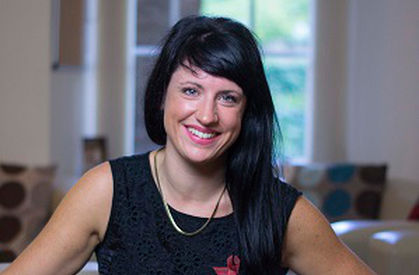
- Written by: Amy Solon — Waverley Care — Caring Conversations Co-ordinator
- Published: 4th April 2018
Amy Solon of Waverley Care talks about how meaningful conversations with patients can mark a fundamental shift in health and social care.
At the second national co-production and community capacity building conference in 2013, former Chief Medical Officer Sir Harry Burns spoke about health professionals’ role in ‘switching the lightbulb on and facilitating the solutions’. His words resonated with me as a self management practitioner; they were a reminder of our responsibility in health and social care to find out what matters to the person. Moreover, it is also how we then use this understanding to support them to improve health outcomes. As I sit and reflect today however, five years on from when they were first spoken, Sir Harry’s words strike a chord with me in a different way and from a very personal perspective; this time as a mum to a child with a long term health condition.
Having been blessed with good health, I’ve had little cause to use the NHS. In early 2016, my little girl was born with a rare condition affecting her lymphatic system. Since then, we have had numerous interactions with health professionals from varying disciplines. I’ve realised that whilst the management of her condition is essential for our peace of mind, what is equally important is the collaborative approach that allows the facilitation of solutions that enable us, as a family, to live a happy and fulfilled life. Thanks to the wonderful teams who have ‘treated’ our entire family unit rather than solely our girl’s specific condition, we have largely been afforded the opportunity to do this.
It’s no secret there is greater pressure on NHS services than ever before. With the proliferation of people living with multimorbidities and having complex health needs, we know patients would benefit from a different model of care to the traditional medical one. This is a significant developing challenge for us in Waverley Care; thanks to effective HIV treatment, there is an ageing population who present with health conditions alongside their HIV diagnosis. Our research in relation to stigma in healthcare settings has highlighted the importance of focussing on the person not the condition.
This has been reiterated in the new GP contract. It specifies a need for a move away from patients as passive recipients of care towards people who play a fundamental and central role in the management of their health and the way in which they live their lives.
Resources such as Waverley Care’s ‘Putting Caring Conversations into Practice ’(this link will take you away from our website)– a person centred care digital learning resource for clinical and non clinical staff’s use in interactions with patients – provides a model to highlight how conversations can support patients in health and life. Using the stories of people living with HIV, it illustrates how practitioners can support patients to best manage their health and well-being and live life to the full. Caring Conversations encourages staff to move away from the tick box and to work with the person sitting in front of them rather than focussing on the condition they are living with. It talks about having courage to work in a different way; having all the answers doesn’t necessarily equate to doing a good job. In fact, sometimes the simple act of listening is all that is needed by the person at that moment in time. This has certainly benefited me in my interactions with my little girl’s medical teams… having a safe space to voice my fears is part of my fixing.
But to me, it seems that the shift is greater than this. It’s not a top down approach. It’s not even a bottom up approach. It is an opportunity for both parties – patient and professional (or perhaps, just ‘person’ is the right word?) to work together, ask questions and share responsibility and ownership for a greater and more profound culture change.
Amy is the caring conversations coordinator for Waverley Care. She has been working in the area of self management for many years and has worked with a number of health boards across Scotland to support the development and embedding of their self management practices. Most recently, she has been working on a new person centred care digital learning resource for staff working in secondary care settings. It can be found at www.caringconversations.scot (this link will take you away from our website). To get in touch with Amy, she can be contacted on amy.solon@waverleycare.org
End of page.
You may also like:
A child cannot truly feel safe in a school or community if they do not feel that they belong.
Continue readingFor 20 years, The ALLIANCE has listened to member voices to help protect and improve Scotland's care services.
Continue readingWith the ALISS Customisable Map Tool, organisations can share info about community resources in ways that work for the people they support.
Continue readingIrene Mackintosh, CEO at Mhor Collective shares highlights and hopes for rights in a digital age.
Continue readingIn her latest TFN column, our Chief Officer Sara Redmond reflects on the proposal to collapse Scotland's 14 regional health boards into two.
Continue readingWhen we listen to lived experience, we create better resources, challenge assumptions and help create safer communities for everyone.
Continue readingGozie reflects on supporting citizen engagement, digital inclusion and hopes for the future.
Continue readingDCP member and Project Co-ordinator Esther Misajel shares Pachedu's journey towards digital inclusion.
Continue readingChris Mackie, Director of Digital, reflects on what ALISS has achieved so far this year and shares what is still to come.
Continue readingAt the ALLIANCE and beyond, true and meaningful policy reform means turning people's experiences into lasting action on the ground.
Continue readingGLP-1s can transform health but without adequate wraparound support, weight loss may come at the cost of nutrition, muscle and wellbeing.
Continue readingSheila Duffy, Chief Executive of ASH Scotland, is appealing for support for proposals to restrict tobacco, vapes and nicotine products.
Continue readingBilly McClean reflects on why SCIC26 offers a vital opportunity to learn together, share what works, and shape the future of integrated care
Continue readingTo mark the ALLIANCE's 20 year anniversary Paul Okroj reflects on the importance of supported self management.
Continue readingTo mark Scottish Learning Disability Week (7 - 13 September), Bruce Adamson reflects on this year's call to action.
Continue readingIn her latest TFN column, our Chief Officer Sara Redmond reflects on the current state of social care in Scotland.
Continue readingKicking off September for the ALLIANCE's 20 year anniversary, Grace reflects on the Self Management Programme
Continue readingSara Redmond, ALLIANCE Chief Officer, on the priorities for 2026's Programme for Government.
Continue readingSandra Auld reflects on the ALLIANCE's people focused impact, collaboration, lived experience, campaigns and lasting change in Scotland.
Continue readingMark shares his experience with gambling harms, and how this intersected with the launch of the ALLIANCE's ScotRGH programme in 2020.
Continue readingProfessor Anna Glasier celebrates 20 years of the ALLIANCE and it's vital role in shaping the Women's Health Plan for Scotland.
Continue readingSara Redmond, ALLIANCE Chief Officer, on the challenges faced by community-led health organisations in delivering prevention.
Continue readingAnnie shares her experience of youth politics, and how SAFE has helped her make connections and makes sense of the world of politics.
Continue readingChloe Craig reflects on how we have helped connect Scotland’s lived experience voice to conversations happening beyond our borders.
Continue readingDr Irene Oldfather reflects on two decades of growth, collaboration, and person centred impact across Scotland and beyond.
Continue reading