
How lived experience affects the personal and professional
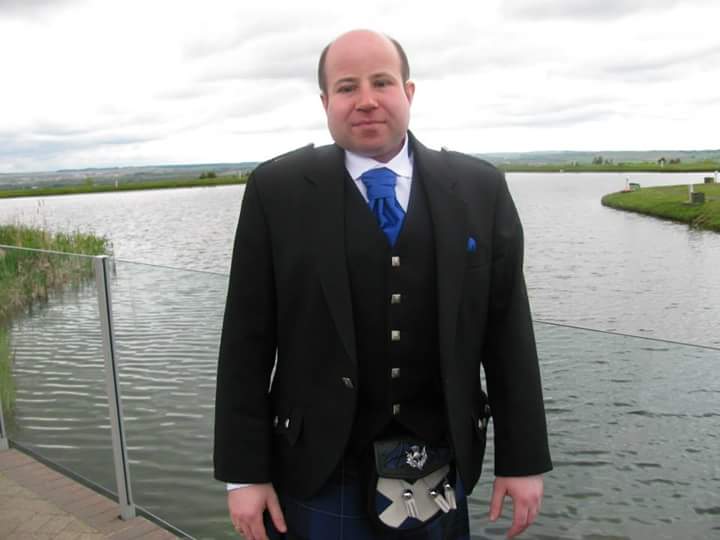
- Written by: David Howie — — MSc Student
- Published: 16th September 2020

David reflects on his experience of higher education and how his academic journey has helped him find his path and increase his confidence.
When I returned to higher education in 2014 at the young age of thirty-one, the plan was not to get my MSc by 2020. The goal was to find “the self” and to get back on the path forward. The world had beat me to my knees. It would have kept me there permanently if I had let it. I required a project – something to focus my mind. I chose to study Politics, Philosophy and Economics with the Open University for three reasons: (1) I had joined a UK political party that same year therefore understanding the UK political framework was essential, as my objective was to use politics to improve the lives of people with disabilities, (2) I felt that I had completed the wrong undergraduate degree and the opportunity to study part-time, for free with a Scottish Government grant was a fantastic opportunity and (3) I required a hand to get back on the path and the Open University held out that hand in 2014.
The Open University
The structure of the Open University is significantly different from what Open University students call ‘brick universities.’ The Open University has three levels: the requirements for passing each level is to complete two modules (120 credits). As the Scottish Government was covering costs for my second undergraduate degree, I decided to complete all 360 credits. That was possibly my first mistake or at least my first perceived mistake. I had a preconception that I was going to be studying Politics, Philosophy and Economics from day one. Instead, my first 120 credits with the Open University taught ‘Introducing the Social Sciences.’ Reading the two books affiliated with ‘Introducing the Social Sciences,’ now, it is easy to see just how well written and edited the Open University books are. Back in 2014/15, my “synaptic self” (my brain), however, struggled to understand the importance of studying the infrastructure and institutions and how infrastructure and institutions provide an understanding of “place” and the politics which govern that place.
Due to living with the long term side effects of a childhood brain tumour and stroke, my brain takes longer to process the data (what the mind sees and hears) and turn the data into knowledge. I remember one of my tutors during my first 120 credits with the Open University suggesting “I don’t write the way I speak.” My younger brother always reinforced the thinking that one’s writing will be more legible and flow better if the “writing flows the same as speech.” In academic writing, that is a point which is not possible to ‘over-emphasise.’
Why my marks do not reflect my understanding
The main reasons why my module marks did not reflect my understanding of the subject area is due to the vastness of the subject area. To clarify that point, what content an essay can contain is dependent upon the word constraint. For example, I wish to keep this article under 1000 words. Therefore, there is a restriction on the information I can provide. However, with regards to academic writing, I try to say too much, which resulted in critical areas of the essay not been, defined, developed and discussed. Many of you may not have had a brain tumour, stroke or may not identify as disabled, therefore, the reaction to what I said above could receive the dismissive view that that is common knowledge. Common knowledge for someone that has not had a brain tumour or stroke, perhaps. For me, however, it has taken six years to grasp that point entirely.
Glasgow Caledonian University: My MSc
I write this article, as I wait for confirmation that I have passed my re-sit and can therefore complete my dissertation. It is ironic but failing parts of the modules which prevented me from handing in my dissertation this month could have been the best thing that happened. Failing and the COVID-19 pandemic has helped me reflect on how I see myself and my professional identity. I should make it clear that I had help and a lot of feedforward from lecturers over the re-sit time-frame for which I am grateful. The point I want to make clear more generally is that during the re-sit period, I was encouraged to embrace my disability and to see my lived experiences as part of my professional identity. This is the most important thing I will take away from my six years of higher education. And I hope the most important thing you will take away from reading this is this – lived experiences matter. My lived experiences shaped me as an individual, lived experiences also shaped my professional identity, which I want all of society to see.
My MSc has provided me with a lot of self-confidence. I feel as if I can now communicate my ideas in a way which are readable and straightforward to understand. If there is a criticism I have, though, it is I feel as though to be accepted as an academic, I have had to give up a lot of thoughts to give my writing legitimacy. This requires more research and society cannot change because social norms will not let it. But social norms will not change if no one will challenge them.
To conclude, I want to remind you that my academic journey was my way to find my path and move forward with life. If you have lost your way, I suggest doing something which makes you happy. You will never know, the road ahead may just find you.
End of page.
You may also like:
With the ALISS Customisable Map Tool, organisations can share info about community resources in ways that work for the people they support.
Continue readingIrene Mackintosh, CEO at Mhor Collective shares highlights and hopes for rights in a digital age.
Continue readingIn her latest TFN column, our Chief Officer Sara Redmond reflects on the proposal to collapse Scotland's 14 regional health boards into two.
Continue readingWhen we listen to lived experience, we create better resources, challenge assumptions and help create safer communities for everyone.
Continue readingGozie reflects on supporting citizen engagement, digital inclusion and hopes for the future.
Continue readingDCP member and Project Co-ordinator Esther Misajel shares Pachedu's journey towards digital inclusion.
Continue readingChris Mackie, Director of Digital, reflects on what ALISS has achieved so far this year and shares what is still to come.
Continue readingAt the ALLIANCE and beyond, true and meaningful policy reform means turning people's experiences into lasting action on the ground.
Continue readingGLP-1s can transform health but without adequate wraparound support, weight loss may come at the cost of nutrition, muscle and wellbeing.
Continue readingSheila Duffy, Chief Executive of ASH Scotland, is appealing for support for proposals to restrict tobacco, vapes and nicotine products.
Continue readingBilly McClean reflects on why SCIC26 offers a vital opportunity to learn together, share what works, and shape the future of integrated care
Continue readingTo mark the ALLIANCE's 20 year anniversary Paul Okroj reflects on the importance of supported self management.
Continue readingTo mark Scottish Learning Disability Week (7 - 13 September), Bruce Adamson reflects on this year's call to action.
Continue readingIn her latest TFN column, our Chief Officer Sara Redmond reflects on the current state of social care in Scotland.
Continue readingKicking off September for the ALLIANCE's 20 year anniversary, Grace reflects on the Self Management Programme
Continue readingSara Redmond, ALLIANCE Chief Officer, on the priorities for 2026's Programme for Government.
Continue readingSandra Auld reflects on the ALLIANCE's people focused impact, collaboration, lived experience, campaigns and lasting change in Scotland.
Continue readingMark shares his experience with gambling harms, and how this intersected with the launch of the ALLIANCE's ScotRGH programme in 2020.
Continue readingProfessor Anna Glasier celebrates 20 years of the ALLIANCE and it's vital role in shaping the Women's Health Plan for Scotland.
Continue readingSara Redmond, ALLIANCE Chief Officer, on the challenges faced by community-led health organisations in delivering prevention.
Continue readingAnnie shares her experience of youth politics, and how SAFE has helped her make connections and makes sense of the world of politics.
Continue readingChloe Craig reflects on how we have helped connect Scotland’s lived experience voice to conversations happening beyond our borders.
Continue readingDr Irene Oldfather reflects on two decades of growth, collaboration, and person centred impact across Scotland and beyond.
Continue readingDisabled people are some of those who suffer most in crises but are ignored in planning. Our 6-step model builds justice throughout.
Continue readingMaisie Peebles shares her experience working with Aberdeenshire Public Health Team on a ‘digital conversations’ project.
Continue reading