
Why have Moray been so successful in supporting those over 60?
- Written by: Carmen Gillies — Health and Social Care Moray — Community Wellbeing Development Officer
- Published: 12th June 2020

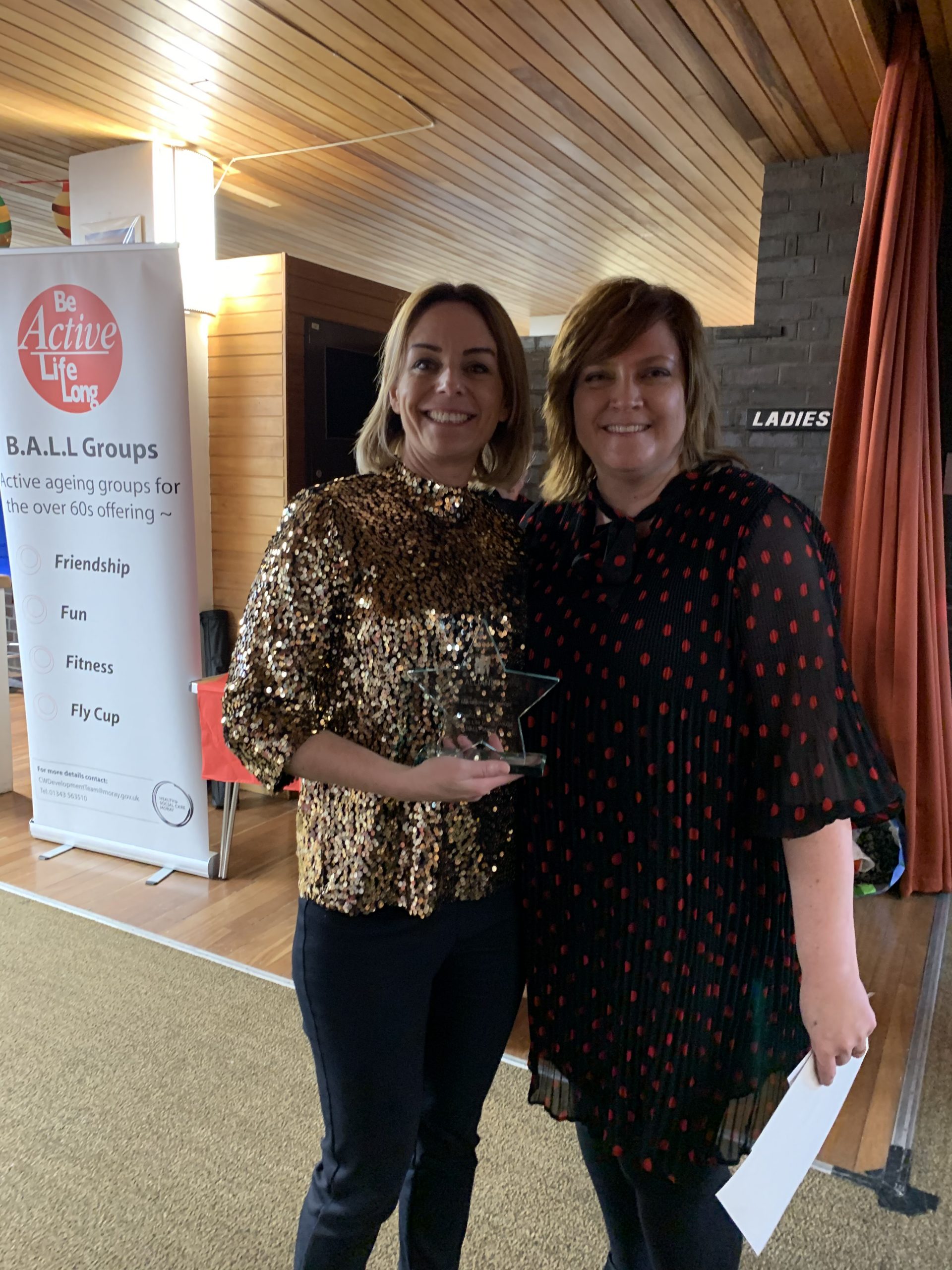
Moray’s Be Active Life Long (BALL) Groups are winners of the 2019 Self Management Project of the Year award.
There are 20 active ageing groups in Moray, which are run by and for older people, with support from the Community Wellbeing Development Team (CWDT) for Health and Social Care Moray. The CWDT help over 800 people each week to stay active, manage their own physical and mental wellbeing and keeping connected to their community.
BALL Groups are unique to Moray and originated in 2005. They were created out of the need to improve mental and physical activity amongst those over 60 in order to keep them connected to their communities and to prevent, reduce or significantly delay the need for formal care services. In turn this supports their self management journey. BALL members attend for many different reasons, whether they are coping with a long term health condition, recovering from an illness or taking a preventative measure to keep fit and well.
BALL Groups operate within communities, attracting members from surrounding localities. Hopeman, a small coastal village, was the first to be set up, targeting existing community groups with messages about improving health through physical and mental activities and increased socialisation. This is achieved through an hour of physical activity (e.g. yoga, dancing, walking), a tea and coffee break with a chance to catch up and then a ‘seated’ activity such as a craft session.
Testimonials from BALL members:
“One of the reasons the BALL Group works so well is the amount of time that the team put into to setting us up and coming along to all the sessions. And then after a wee while we decided we could become independent, which we did.”
“If somebody had said to me I’d be doing Tai Chi and yoga and stuff, and organising a Group like this, I wouldn’t have believed it. It opens your mind to different things.”
“It’s just wonderful – you see them coming in kind of timid and shrunken and after three or four weeks they’re striding along. You wouldn’t believe the difference it makes and it can spread into all areas of their life. It’s as though someone has lit a light inside them.”
Lessons Learned:
- The model is self-sustaining, so after the initial set-up the time needed for practitioner (CWDT) input is greatly reduced– although input is still vital in terms of advice, link visits and crisis management. By being fast to respond to any queries the CWDT maintains the trust of the groups, meaning any issues are likely to be raised and resolved at an early stage. Part of the appeal to members and the secret of the cohesion of each group is knowing that being there helps and supports the other members.
- The increased mental stimulation breeds curiosity and a willingness to learn. Members report surprising themselves with what they have been able to achieve since getting involved. Whilst BALL Groups have worked effectively in almost every area, in a one case there have been insufficient numbers to make a viable group. In this instance the interested individuals have gone on to meet weekly at each other’s homes, so the end result of decreased loneliness/ improved socialisation and support has still been achieved. This demonstrates a real strength of the way BALL Groups are run. The outcomes are clear to see at an individual and group level.
- The CWDT also work alongside health and social care services to provide support to individuals. The trust they have built over time for the BALL brand amongst individuals and service providers allows them to be an effective facilitator between all parties concerned and to receive referrals into BALL Groups through the Social Work team and GPs. Whilst the programme was outsourced to a Third Sector provider for a period, the trust and reputation of the CWDT proved to be a major factor in the ability of BALL Groups to grow and prosper, so the decision was taken to bring it back into the Council. This trust is reflected at a membership level, with word of mouth being the main recruitment method for BALL Groups.
Find out more about the Self Management Awards 2020
End of page.
You may also like:
Dr Anthony McMahon reflects on the importance of the Community Links Worker within his GP surgery - and why it makes all the difference.
Continue readingAs part of our 20 year anniversary, the Integration Team highlight the importance of our Connected Communities series.
Continue readingTo mark ‘What matters to you?’ Day, The ALLIANCE's Barbara Flynn considers the impact of Tommy Whitelaw’s talks for nurses and midwives.
Continue readingThe ALLIANCE’s Humans of Scotland project works to challenge stigma.
Continue readingIn her latest TFN column, our Chief Officer Sara Redmond reflects on post election feelings and Scotland’s future.
Continue readingALLIANCE Chief Officer, Sara Redmond, reflects on our Annual Conference 2026 and how we're turning hope into action.
Continue readingALLIANCE member, Catherine, shares the importance of initiatives like 'What Matters To You?' Day in promoting person centred care.
Continue readingLearn about how the ALLIANCE has championed joined-up, person centred care.
Continue readingDementia Action Week highlighted some great resources and support for people living with dementia and their family, friends, and carers.
Continue readingSteven Mair gives us an insight into his role as a gamer at the Glasgow Children’s Hospital Charity.
Continue readingSince 2009, ALISS has helped people find local health and wellbeing support. Any group, big or small, can add their information.
Continue readingThe new Scottish Government must turn promises into action to improve hospice and palliative care
Continue readingTogether, we can create lasting change for everyone living with Crohn’s or Colitis.
Continue readingFind out more about these digital self management tools and how to get in touch to arrange an information session.
Continue readingOur Chief Officer Sara Redmond addresses recent commentary on the relationship between Government and the Third Sector.
Continue readingCornell explores how we can build an environmental human rights-based culture
Continue readingLouise Coupland, Digital Health and Social Care Programme Manager shares her opinions on the national roll out of MyCare.scot.
Continue readingChris Mackie, Director of Digital, looks back at how ALISS has developed, grown, and innovated over time.
Continue readingCrohn’s and Colitis care in Scotland is at a pivotal moment. Urgent action is needed to tackle delays and poor access to vital services
Continue readingThe ALLIANCE’s Lewis Shaw reflects on the importance of rehabilitation support.
Continue readingIsabella Goldie of Deafblind Scotland reflects on the value of partnership work.
Continue readingFind out more about the inaugural Power of Attorney Day taking place on 22 April 2026.
Continue readingDr Hannah Tweed reflects on 20 years of the Scottish Sensory Hub, the important work they do and why it matters.
Continue readingAs part of our 20 year anniversary, Kerry shares her reflections on how far the ALLIANCE has come, our achievements, and our impact.
Continue readingIn her latest TFN column, our Chief Officer Sara Redmond reflects on 20 years since Scotland moved to put children at the centre of policy.
Continue reading