
What we talk about when we talk about freedom
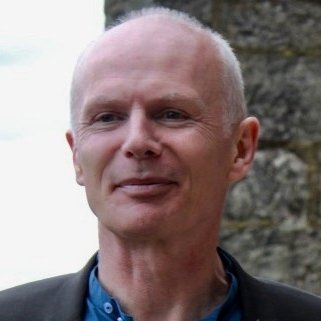
- Written by: John McCormack — Recovery In Prisons
- Published: 2nd March 2020

An exciting new partnership initiative has launched to support people in prisons to understand trauma.
Strengths based…recovery focused…self management…peer support…training for trainers…partnerships…life beyond prison…psychologically informed…confidence building…expanding possibilities…learning from each other…what’s not to love?
A new initiative funded by the Scottish Violence Reduction Unit (VRU) (this link will take you away from our website) launches on 10th March 2020 at Dumfries Prison. It involves the VRU, alongside prisoners and prison staff, police and local agencies ‘We Are With You” (this link will take you away from our website), Apex (this link will take you away from our website), and Aberlour (this link will take you away from our website).
Among the advantages of taking a trauma informed, solution focused approach is the fact that participants are not required to disclose vulnerabilities or past traumas. This is always important but especially in a prison setting. The emphasis of the programme is on relationships, boundaries and creating a safe space in which people can explore their personal stories and see new possibilities.
Understanding Trauma…Not Sharing Trauma
Trauma and distress are highly prevalent in prison populations yet they are not easily discussed in prison environments. The group work establishes safety from the outset, making it clear we are not in group therapy and that ‘baring your soul’ plays no part in the process. Instead we talk about how we survive distress, how we overcome challenges and in this way we shared our knowledge and experience of resilience and strengths through real life examples.
This approach helps break down barriers, allowing people to see beyond identities such as ‘prisoner’ or ‘offender’ and to see that other positive roles and identities are possible.
Building on Success
A first iteration of this approach was piloted in Perth Prison with prisoners engaged with the Physical Education team. The 8 sessions were highly rated both by prisoners and staff interested in prisoner outcomes.
The positive results led to a second programme being run with the prison’s NHS “Moving on in Recovery” (MOIR) addiction treatment team. This work was jointly facilitated by Rhona Millar of the ALLIANCE and John McCormack of Recovery Training and Consultancy who is leading on the new VRU initiative.
One major difference in the new pilot is the inclusion of local agencies, thus ensuring that the ethos and practice is in action both inside and outside of the prison. This will help to support a more effective and helpful transition experience for prisoners on release.
9 Session Structure
The 9 session course is built around safety, enhancing self-awareness, and reviewing current knowledge around adverse childhood experiences and trauma. The course essentially seeks to provide people with the kind of knowledge and skills previously only given to practitioners and therapists. By the end of the course participants’ will have an enhanced capacity to self manage and direct their own recovery journey towards a self determined preferred future. The nine sessions are:
1. Resilience and Recovery
2. Exceptional Moments
3. My Preferred Future
4. Understanding and Overcoming Trauma
5. Tackling the Inner Critic
6. Truth is Strength
7. Stepping Out of the Drama Triangle
8. I am on a Mission!
9. Reflections on Talk About Freedom
Sustainability is Key
We plan for the pilot to become sustainable, providing best value along with solid outcomes. Taking a Training for Trainers (T4T) approach in parallel with the groupwork is an effective way to achieve this.
Participants to the course are offered the opportunity and training to become facilitators themselves. There are T4T days available after the course and the aim is that the work can continue in the long term without external input being required.
‘Talk about Freedom’ group work aims to:
- Empower people to envision and plan steps towards their preferred future
- Help people recover from mental distress
- Enable self-management
- Enhance awareness of strengths, skills, abilities and resilience
- Build self-sustaining local groups as a resource for wellbeing
- Make recovery knowledge and skills widely available to all
A central ambition is that the project will be rolled out across the communities and wider prison estate in Scotland, providing low cost, effective and replicable approaches to recovery and rehabilitation.
John McCormack can be reached by emailing johntraining@talktalk.net (this link will take you away from our website) or on Twitter at @recoveryjohn1 (this link will take you away from our website).
End of page.
You may also like:
Annie shares her experience of youth politics, and how SAFE has helped her make connections and makes sense of the world of politics.
Continue readingChloe Craig reflects on how we have helped connect Scotland’s lived experience voice to conversations happening beyond our borders.
Continue readingDr Irene Oldfather reflects on two decades of growth, collaboration, and person centred impact across Scotland and beyond.
Continue readingDisabled people are some of those who suffer most in crises but are ignored in planning. Our 6-step model builds justice throughout.
Continue readingMaisie Peebles shares her experience working with Aberdeenshire Public Health Team on a ‘digital conversations’ project.
Continue readingSara Redmond, ALLIANCE Chief Officer, on why the Scottish Government and parties must seize the opportunity for change.
Continue readingDirector of the Links programme, Roseann, discusses why we need to focus on person centred care, and why the programme is central to this.
Continue readingReflections on the ALLIANCE Integration in Action: Inclusive Leadership event.
Continue readingWhat does The Scottish Report tell us about how we're supporting people with inflammatory mediated autoimmune conditions (IMIDs)?
Continue readingAvril McLean from Action from ME shares new resources designed to support professionals understand the impact of ME on people's lives.
Continue readingMandy Wright from Home Energy Scotland shares how partnerships positively impact their work.
Continue readingToo many young people are falling through the mental health support gap. How do we fix the "Missing Middle"?
Continue readingJoe McCready from Carers UK shares how important their annual survey is, and why it is invaluable for unpaid carers to have their say.
Continue readingColette reflects on the last 12 years of the Community Links Worker programme, as well as her own experience of being a CLW.
Continue readingWith the current World Cup, gambling presents an even higher risk. How can we prevent young people from getting tangled in this web?
Continue readingDr Anthony McMahon reflects on the importance of the Community Links Worker within his GP surgery - and why it makes all the difference.
Continue readingAs part of our 20 year anniversary, the Integration Team highlight the importance of our Connected Communities series.
Continue readingTo mark ‘What matters to you?’ Day, The ALLIANCE's Barbara Flynn considers the impact of Tommy Whitelaw’s talks for nurses and midwives.
Continue readingThe ALLIANCE’s Humans of Scotland project works to challenge stigma.
Continue readingIn her latest TFN column, our Chief Officer Sara Redmond reflects on post election feelings and Scotland’s future.
Continue readingALLIANCE Chief Officer, Sara Redmond, reflects on our Annual Conference 2026 and how we're turning hope into action.
Continue readingALLIANCE member, Catherine, shares the importance of initiatives like 'What Matters To You?' Day in promoting person centred care.
Continue readingLearn about how the ALLIANCE has championed joined-up, person centred care.
Continue readingDementia Action Week highlighted some great resources and support for people living with dementia and their family, friends, and carers.
Continue readingSteven Mair gives us an insight into his role as a gamer at the Glasgow Children’s Hospital Charity.
Continue reading