
Publication of Phase Two of Scotland’s Women’s Health Plan
- Area of Work: The ALLIANCE
- Type: News Item
- Published: 20th January 2026

The Scottish Government Plan builds on progress from the first Women’s Health Plan and sets new priority areas.
Women and girls make up over 51% of the population of Scotland, yet their specific health needs, which are different to those of men, have historically been overlooked .
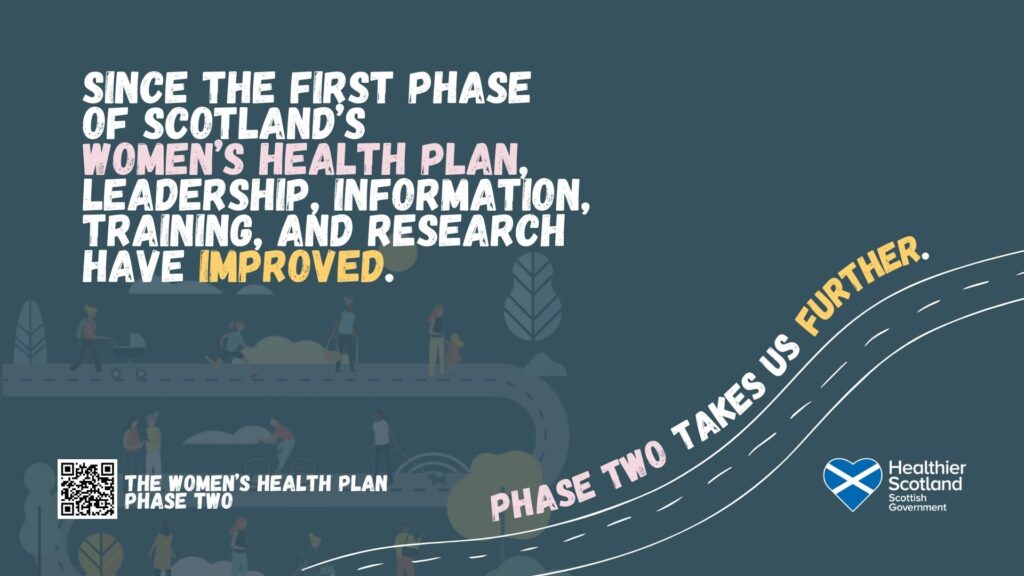
Phase Two of the Women’s Health Plan is building on progress from the first phase of the Plan (2021-2024), to take action for women’s health across Scotland and set out new areas of commitment and focus.
This first phase of the Women’s Health Plan focussed on creating the conditions for change needed to improve health outcomes for all women and girls in Scotland.
Phase Two continues this work and focuses attention on priority programs to:
- Transform gynaecology services to ensure women and girls have timely access to gynaecological care;
- Eliminate cervical cancer by 2040;
- Improve support and understanding of women’s brain health.
This next phase also sets out 40 new actions related to:
The Health of Women and Girls: Cross-cutting actions to improve women’s health research and data, awareness raising, and health information
Optimising Future Health: Focused actions on optimising women’s health across the life course through a preventative lens, with a specific focus on bone health, pelvic floor health and building on progress made on women’s heart health.
Gynaecology and Reproductive Health: improve access to care and treatment for menopause and menstrual health, including fibroids, endometriosis, adenomyosis and polycystic ovary syndrome.
Abortion, Sexual Health and Contraception: improving equity in abortion provision across Scotland, including later stage abortion; and exploring the issue of hormone hesitancy amongst young women along with expanding post-partum contraception.
The Women’s Health Plan Phase Two is available to read online here
You can also access an Easy Read Version.
In addition, the Scottish Government have published The Health of Women and Girls: Health and Social Care Policy beyond the Women’s Health Plan and the Women’s Health Plan Phase Two: Focus Group Report.
The ALLIANCE contributed to discussions on the development of Phase 2, as well as coordinating input from our Women’s Health Plan Lived Experience Stakeholder Group. Over several in-person and online meetings, the Group shared priorities and feedback which helped shape different aspects of the Plan and its areas of focus. To understand the role that the Group played, and hear from the women themselves about their experience in contributing to policy design, you can hear from several members in our current blog series – Women’s health blog series – Developing Phase 2 of Scotland’s Women’s Health Plan – Health and Social Care Alliance Scotland
The Lived Experience Stakeholder Group is one element of the ALLIANCE’s wider Women’s Health Programme, which is delivered in support of the Women’s Health Plan and in partnership with the Scottish Government. Supporting the Women’s Health Plan – Policy and research
Further information on women’s health
The Women’s Health Platform on NHS Inform aims to provide women with consistent, reliable and accessible information empowering them to make informed decisions about their health. It includes a range of short films with experts, animations and lived experience films to support greater accessibility and engagement with clinical information.
The first phase of the Women’s Health Plan (2021-2024) can be read here.
End of page.
You may also like:
Your feedback will shape an updated version of the toolkit.
Continue readingThe Scottish Transitions Forum hosted by ARC Scotland have launched the Compass National Data report for 2025-26.
Continue readingAre you blind or partially sighted? Share your experience of food packaging in a short UK-wide survey.
Continue readingFour free traineeships available in Scotland.
Continue readingLearn more about ishush - a free online support programme for adults with hyperacusis.
Continue readingApply to support equalities groups in Renfrewshire.
Continue readingConsultation launched for parents/carers, people with lived experience, and professionals.
Continue readingLearn more about Posterior Cortical Atrophy and why sensory care matters.
Continue readingNesta launch new report 'Getting it right for every baby' highlighting key challenges in the existing landscape of support.
Continue readingThe Oversight Board for the promise has launched their fourth report into Scotland’s progress in keeping the promise.
Continue readingUrgent investment needed to deliver fair, person centred social care in Scotland, say the ALLIANCE.
Continue readingOur presentation noted the negative effects of social care charging on human rights including health and adequate standard of living.
Continue readingThe ALLIANCE publishes report outlining key learning from the delivery of Self Management for Life 2024 Small Grants.
Continue readingFor Menopause Month in October, the ALLIANCE and Scottish Government have brought together all our resources on menopause in one pack.
Continue readingNew report sets out action the Government must take to ensure people living with HIV can live well, free from stigma and discrimination.
Continue readingComplete survey on priorities for research into women's cardiovascular disease, in partnership led by King's College London.
Continue readingChest Heart & Stroke Scotland has launched its new Women’s Health Plan to improve health outcomes for women in Scotland.
Continue readingAn awareness day to shine a light on the impact a playlist of meaningful songs can have for people living with dementia.
Continue readingThe ALLIANCE publishes a report outlining key learning from the delivery of Self Management Reflective Practice sessions.
Continue readingA UK wide creative competition for college and VET learners to show why UK–EU connections matter.
Continue readingThird sector partnership, including the ALLIANCE, publishes an updated joint statement outlining urgent actions required on prevention.
Continue readingPractitioners working across Third Sector Mental Health organisations are invited to participate in Digital Inclusion Champions Training
Continue readingGlasgow Caledonian University are seeking organisations who can offer placements for their Doctorate Counselling Psychology students.
Continue readingEnquire are keen to understand how co-ordinated support plans are working in real-life .
Continue readingThis year’s theme is ‘I am here…to be seen’.
Continue reading