
Actions on women’s health should not be shouldered by women alone
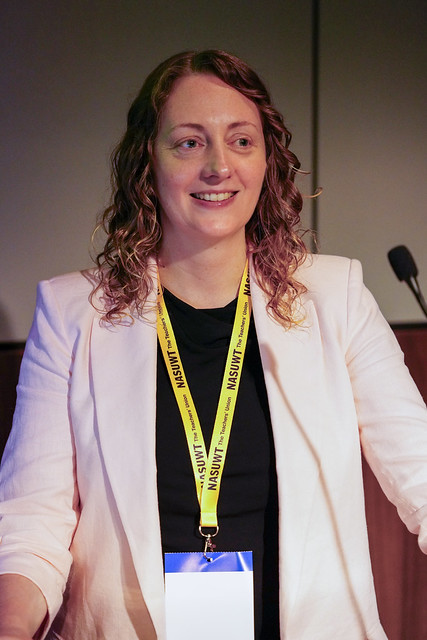
- Written by: Tara Lillis — — STUC Women's Committee
- Published: 4th February 2026

The ALLIANCE’s Women’s Health Lived Experience Group reflect on their input to Phase 2 of the Scottish Government’s Women’s Health Plan.
I am currently the chair of the STUC Women’s Committee, which leads on campaigns and policy for women trade union members in Scotland. Every year motions are brought to our Conference which cover the key health priorities of women in the workplace, across a wide variety of industries, both private and public sector. The Committee has lobbied government and employers to facilitate change and to ensure women workers can see experiences reflected and addressed in the Women’s Health Plan.
This year I joined the Lived Experience Group for the first time, bringing my knowledge of campaigning with the STUC Women’s committee, my own experience of women’s health at work, and nearly two decades of work supporting teachers as a trade union official.
The health and wellbeing of women is inextricably linked to their workplace. Progressive terms and conditions and workplace policies can be essential supports for our health and for women’s equality. Yet, women continue to experience discrimination and inequality both in their jobs and across their communities including continuing to carry the disproportionate burden of unpaid care – and all of this of course impacts on women’s health and it impacts in an intersectional way, with individual circumstances and protected characteristics coming together to create compound disadvantage.
At the in-person development day of the Women’s Health Plan Lived Experience Group it was really empowering to be among so many women who were committed to campaign and advocate for women’s health using their lived experience as a driver for change.
Centring the voice of lived experience is critical, however we must ensure ownership of the actions are not solely shouldered by women: women campaigners, women healthcare workers, women workers in the civil service. Where women continue to carry all the work of campaigning, lobbying and building for change, they are of course placing their own wellbeing and health at risk: this is why actions to tackle women’s health must be undertaken in tandem with broader actions to secure gender equality at work, at home and in society.
We also must look to support the women of the future. Coming from a teachers’ trade union, it should be no surprise the value I attribute to education and the importance it plays for us as a society in dispelling myths and tackling mis-information, particularly around health.
My hope for the future of Scotland’s Women’s Health Plan is to see the role of workplaces and employers fully recognised, with national accountability to ensure every woman can feel safe and supported with her health at work.

End of page.
You may also like:
For 20 years, The ALLIANCE has listened to member voices to help protect and improve Scotland's care services.
Continue readingWith the ALISS Customisable Map Tool, organisations can share info about community resources in ways that work for the people they support.
Continue readingIrene Mackintosh, CEO at Mhor Collective shares highlights and hopes for rights in a digital age.
Continue readingIn her latest TFN column, our Chief Officer Sara Redmond reflects on the proposal to collapse Scotland's 14 regional health boards into two.
Continue readingWhen we listen to lived experience, we create better resources, challenge assumptions and help create safer communities for everyone.
Continue readingGozie reflects on supporting citizen engagement, digital inclusion and hopes for the future.
Continue readingDCP member and Project Co-ordinator Esther Misajel shares Pachedu's journey towards digital inclusion.
Continue readingChris Mackie, Director of Digital, reflects on what ALISS has achieved so far this year and shares what is still to come.
Continue readingAt the ALLIANCE and beyond, true and meaningful policy reform means turning people's experiences into lasting action on the ground.
Continue readingGLP-1s can transform health but without adequate wraparound support, weight loss may come at the cost of nutrition, muscle and wellbeing.
Continue readingSheila Duffy, Chief Executive of ASH Scotland, is appealing for support for proposals to restrict tobacco, vapes and nicotine products.
Continue readingBilly McClean reflects on why SCIC26 offers a vital opportunity to learn together, share what works, and shape the future of integrated care
Continue readingTo mark the ALLIANCE's 20 year anniversary Paul Okroj reflects on the importance of supported self management.
Continue readingTo mark Scottish Learning Disability Week (7 - 13 September), Bruce Adamson reflects on this year's call to action.
Continue readingIn her latest TFN column, our Chief Officer Sara Redmond reflects on the current state of social care in Scotland.
Continue readingKicking off September for the ALLIANCE's 20 year anniversary, Grace reflects on the Self Management Programme
Continue readingSara Redmond, ALLIANCE Chief Officer, on the priorities for 2026's Programme for Government.
Continue readingSandra Auld reflects on the ALLIANCE's people focused impact, collaboration, lived experience, campaigns and lasting change in Scotland.
Continue readingMark shares his experience with gambling harms, and how this intersected with the launch of the ALLIANCE's ScotRGH programme in 2020.
Continue readingProfessor Anna Glasier celebrates 20 years of the ALLIANCE and it's vital role in shaping the Women's Health Plan for Scotland.
Continue readingSara Redmond, ALLIANCE Chief Officer, on the challenges faced by community-led health organisations in delivering prevention.
Continue readingAnnie shares her experience of youth politics, and how SAFE has helped her make connections and makes sense of the world of politics.
Continue readingChloe Craig reflects on how we have helped connect Scotland’s lived experience voice to conversations happening beyond our borders.
Continue readingDr Irene Oldfather reflects on two decades of growth, collaboration, and person centred impact across Scotland and beyond.
Continue readingDisabled people are some of those who suffer most in crises but are ignored in planning. Our 6-step model builds justice throughout.
Continue reading