
Don’t confuse your path with your destination
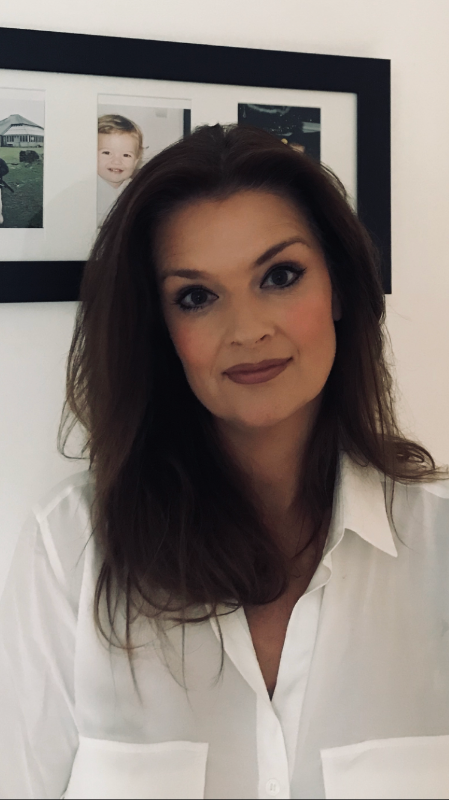
- Written by: Fiona Drouet
- Published: 13th September 2018

Fiona gives a powerful account of her own experience for Suicide Prevention Week 2018.
The doorbell ringing in the middle of the night is never going to end well. On Friday 18th March 2016 at 1.30am we answered the door to two police officers, with no idea our lives were going to irreparably shatter in moments – even the sight of them on the doorstep didn’t forewarn us of what was to come – it was beyond our comprehension, still is.
“We have some very bad news for you”. I desperately ask if it is a break in, my dad, my brother. He takes my hand: “Is your daughter studying at the University of Aberdeen? Emily Drouet? I’m so sorry she has been found . . .”
I can only describe that moment as someone tearing you apart with their bare hands, ripping out your insides. The ground beneath us fell away, we plunged into the most terrifying darkness imaginable.
Only seven months after leaving home full of excitement to study law, Emily had ended her life.
It didn’t make any sense. She was happy, loving her new adventure, new friends, studying and partying, loving life. We’d chatted and texted that day, like every day. She had put on sparkly green eyeshadow to celebrate St Patrick’s night with friends.
How could this even be possible? Desperately trying to understand what happened was overwhelming. An agonising need to make it ok, to somehow change this. It’s too late, it’s too real, I can’t even help my own child. She had only stopped texting her 9-year-old-brother at 8pm when I’d told him it was bed time. Little did I know that the next time he’d wake up the world would be a very dark place, his big sister that he adored would be dead.
I feel sick when I type that word, dead, it’s still too final to accept.
The police brought my sister to me. My husband, my sister and I just held each other, shaking, numb, everything was so horribly empty. We lay there for a few hours, not wanting to tell our son and daughter that they would never see their big sister again. We’ll never forget the noises that came from them, their pain was absolute agony.
In the daze and emptiness of the time that followed we learned that Emily had been subjected to a merciless campaign of physical and emotional abuse by a fellow student. A horrific campaign, she lost all sense of her own worth.
They split up but he would not let go and returned to her room unannounced, a short while after she’d stopped texting me and her brother, to continue the abuse. After he left, she ran out of her flat terrified, looking for help but returned to her room alone. She closed her door and lost her battle within minutes. Our little girl died alone, in her room, scared and broken.
Emily had gone for help but the signs weren’t recognised. We have always been a very close family and Emily would never want to leave us in this pain but her mind took her to a place of despair, somewhere she couldn’t escape from.
We believe Emily needed to escape that moment and the only way she could find was to end her life. She needed the fear to stop.
In her unimaginable despair she found a solution to a problem, which although temporary, seemed permanent to her.
PTSD is a crippling condition and is more common than people think. It often goes undiagnosed and sets in very quickly. Emily died within two weeks of the trauma of being viciously assaulted and fearing for her life.
Suicidal thoughts aren’t discriminative and can often be relentless. Thoughts don’t only follow long-term mental health issues but short-term ones too. No amount of time has to lapse before people can feel overwhelmed so we have to ensure no-one is left waiting for help.
Never be afraid to show others how much you love them. Surround yourself with people who love and value you. And most of all, remember a quote Emily tweeted only days before we lost her – “Don’t confuse your path with your destination. Just because it’s stormy now, doesn’t mean you aren’t headed for sunshine”.
Fiona Druet, Mum
The ALLIANCE and partners have welcomed the publication of the Scottish Government’s new Suicide Prevention Action Plan. The plan aims to reduce deaths by suicide in Scotland and ensure that support before, during and after a crisis is available.
End of page.
You may also like:
A child cannot truly feel safe in a school or community if they do not feel that they belong.
Continue readingFor 20 years, The ALLIANCE has listened to member voices to help protect and improve Scotland's care services.
Continue readingWith the ALISS Customisable Map Tool, organisations can share info about community resources in ways that work for the people they support.
Continue readingIrene Mackintosh, CEO at Mhor Collective shares highlights and hopes for rights in a digital age.
Continue readingIn her latest TFN column, our Chief Officer Sara Redmond reflects on the proposal to collapse Scotland's 14 regional health boards into two.
Continue readingWhen we listen to lived experience, we create better resources, challenge assumptions and help create safer communities for everyone.
Continue readingGozie reflects on supporting citizen engagement, digital inclusion and hopes for the future.
Continue readingDCP member and Project Co-ordinator Esther Misajel shares Pachedu's journey towards digital inclusion.
Continue readingChris Mackie, Director of Digital, reflects on what ALISS has achieved so far this year and shares what is still to come.
Continue readingAt the ALLIANCE and beyond, true and meaningful policy reform means turning people's experiences into lasting action on the ground.
Continue readingGLP-1s can transform health but without adequate wraparound support, weight loss may come at the cost of nutrition, muscle and wellbeing.
Continue readingSheila Duffy, Chief Executive of ASH Scotland, is appealing for support for proposals to restrict tobacco, vapes and nicotine products.
Continue readingBilly McClean reflects on why SCIC26 offers a vital opportunity to learn together, share what works, and shape the future of integrated care
Continue readingTo mark the ALLIANCE's 20 year anniversary Paul Okroj reflects on the importance of supported self management.
Continue readingTo mark Scottish Learning Disability Week (7 - 13 September), Bruce Adamson reflects on this year's call to action.
Continue readingIn her latest TFN column, our Chief Officer Sara Redmond reflects on the current state of social care in Scotland.
Continue readingKicking off September for the ALLIANCE's 20 year anniversary, Grace reflects on the Self Management Programme
Continue readingSara Redmond, ALLIANCE Chief Officer, on the priorities for 2026's Programme for Government.
Continue readingSandra Auld reflects on the ALLIANCE's people focused impact, collaboration, lived experience, campaigns and lasting change in Scotland.
Continue readingMark shares his experience with gambling harms, and how this intersected with the launch of the ALLIANCE's ScotRGH programme in 2020.
Continue readingProfessor Anna Glasier celebrates 20 years of the ALLIANCE and it's vital role in shaping the Women's Health Plan for Scotland.
Continue readingSara Redmond, ALLIANCE Chief Officer, on the challenges faced by community-led health organisations in delivering prevention.
Continue readingAnnie shares her experience of youth politics, and how SAFE has helped her make connections and makes sense of the world of politics.
Continue readingChloe Craig reflects on how we have helped connect Scotland’s lived experience voice to conversations happening beyond our borders.
Continue readingDr Irene Oldfather reflects on two decades of growth, collaboration, and person centred impact across Scotland and beyond.
Continue reading