
The Impact of Loneliness and Social Isolation
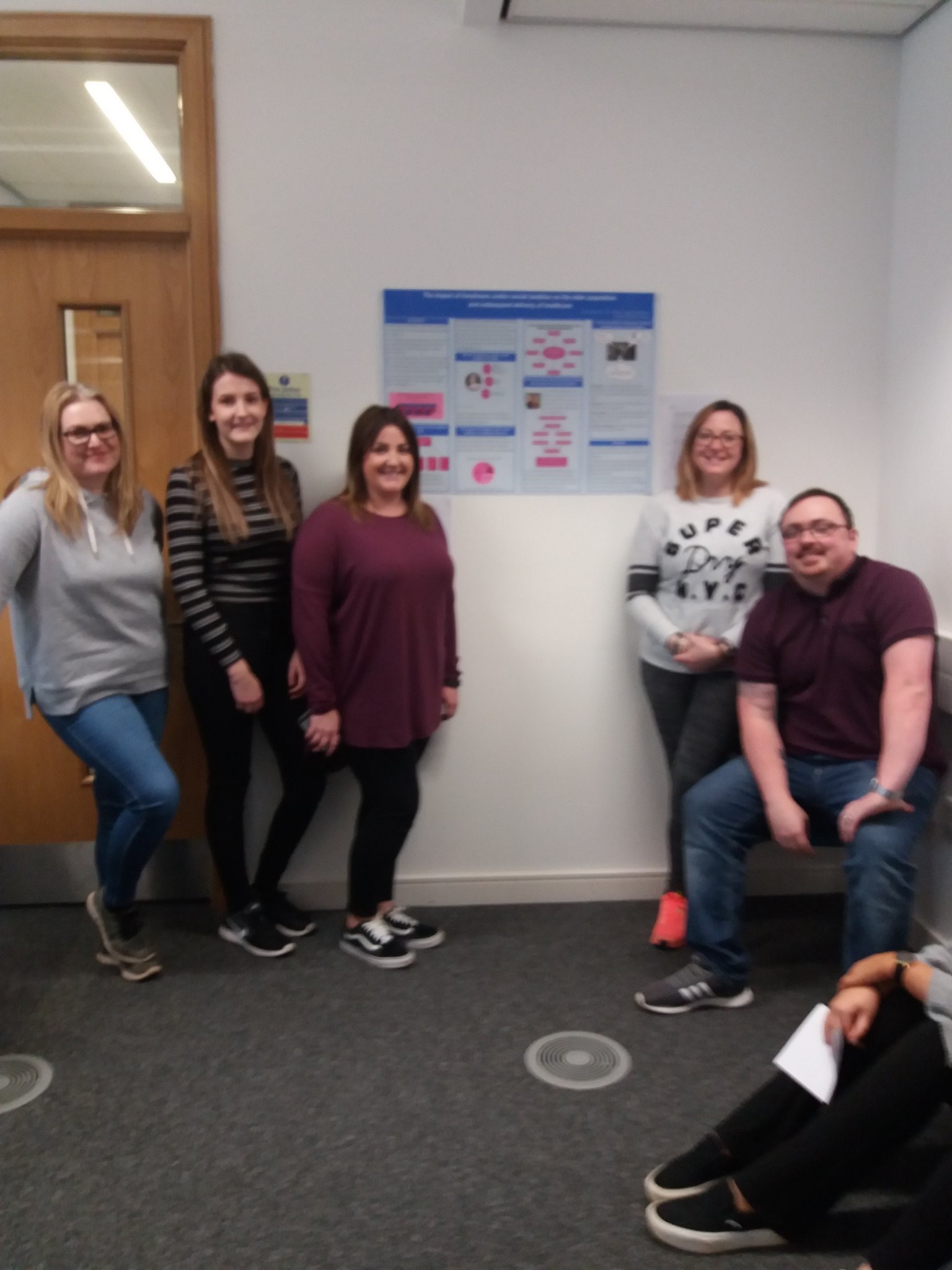
- Written by: Pauline Brady, Sharon Conn, David Connelly, Heather Langdon and Stephanie McGeoch — University of the West of Scotland
- Published: 16th March 2018
Five students from UWS have very kindly shared this guest opinion piece speaking about their research into loneliness and isolation.
We have enjoyed a great relationship over the years with the University of the West of Scotland. They have been very supportive of our Dementia Carer Voices project and have invited our UK Lead Tommy Whitelaw to speak to students on a number of occasions now.
UWS students Pauline Brady, Sharon Conn, David Connelly, Heather Langdon and Stephanie McGeoch have very kindly shared this opinion piece with us, speaking about their research into loneliness and social isolation:
Loneliness and social isolation has become a current focus for the UK Government so when we were given the opportunity at University to produce a health awareness presentation on the subject we were excited to be a part of it. Our group, made up of first year Adult and Mental Health Nursing students came together because of our common interest in what causes loneliness and social isolation. We were interested to explore what can be put in place to reach out to those struggling within communities. For some members of the group this interest stemmed from their own, lived experience of feeling lonely. This highlighted that loneliness and social isolation are not limited to specific life stages but rather can affect anyone at any time. However, on further exploration we found that although these issues can indeed affect anyone the impact in older adulthood can be particularly apparent and as such we decided to focus on this stage of life.
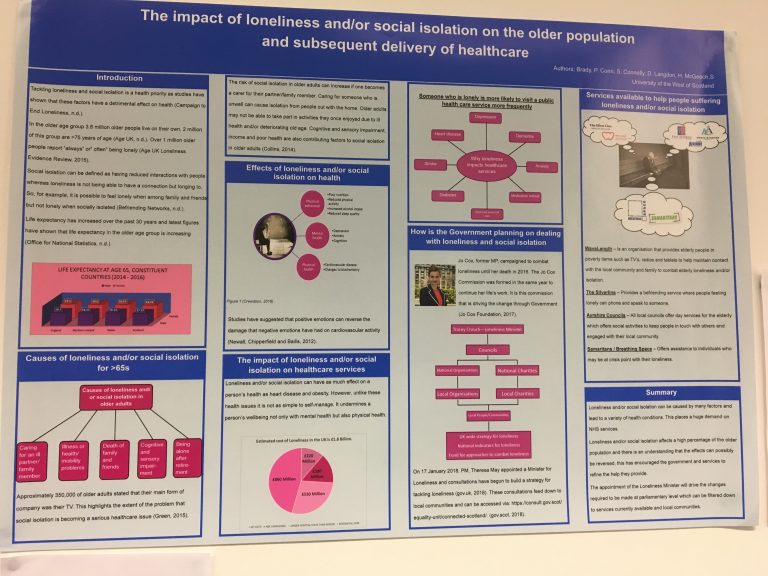
Extensive research was undertaken to establish exactly what should be included on the poster to best illustrate the impact of this important issue. We agreed on key points which required to be included; these were the extent of the issue, the costs and impact on health and social care services, related health issues, the history behind the appointment of the Minister for Loneliness and some of the services available to those feeling the effects of loneliness or social isolation.
The figures we discovered were both shocking and heart wrenching. For example, approximately 350,000 older adults feel their main source of company is their television. In a world where instant human interaction is possible via the use of technology it is striking how reliant people have become on virtual rather than actual human contact. We also looked at how the risk of social isolation increased for those caring for a family member. Carers dedicate their time to care for their loved one and miss out on opportunities to socialise and interact with others outside of the home environment. This will be something many people in caring roles will be able to relate to.
From our research it is very clear that as a society we need to come together to work to eradicate loneliness and social isolation. Action is required at governmental, organisational and community levels to address the wide-reaching impact of isolation and loneliness. Failure to act will in the long run incur significant financial, social and emotional costs.
We would like to thank the School of Health, Nursing and Midwifery at UWS Ayr, for challenging their students’ capabilities in researching such a recent topic. We found researching this issue thought-provoking and it has spurred some of the group members on to explore volunteering opportunities within local befriending services we discovered through our work putting the poster together.
Karen McMahon, Lecturer in Mental Health, UWS: “I am really impressed by all the hard work the students put in to create this very professional looking poster. When discussing the poster with them it is apparent how committed they are to drawing attention to the issues of isolation and loneliness. It is so important that the nurses of tomorrow prioritise such critically important issues. I am really looking forward to seeing how this group of students progress their thoughts on these issues over the next few years and beyond.”
Kelly Fullerton, Adult Nursing Student, UWS: “I found the information on social isolation and loneliness really interesting, the group clearly knew what they were talking about as they could answer questions on aspects of the poster I hadn’t heard about before, like the Jo Cox Commission and their involvement in policy building. Well done to all of you.”
End of page.
You may also like:
A child cannot truly feel safe in a school or community if they do not feel that they belong.
Continue readingFor 20 years, The ALLIANCE has listened to member voices to help protect and improve Scotland's care services.
Continue readingWith the ALISS Customisable Map Tool, organisations can share info about community resources in ways that work for the people they support.
Continue readingIrene Mackintosh, CEO at Mhor Collective shares highlights and hopes for rights in a digital age.
Continue readingIn her latest TFN column, our Chief Officer Sara Redmond reflects on the proposal to collapse Scotland's 14 regional health boards into two.
Continue readingWhen we listen to lived experience, we create better resources, challenge assumptions and help create safer communities for everyone.
Continue readingGozie reflects on supporting citizen engagement, digital inclusion and hopes for the future.
Continue readingDCP member and Project Co-ordinator Esther Misajel shares Pachedu's journey towards digital inclusion.
Continue readingChris Mackie, Director of Digital, reflects on what ALISS has achieved so far this year and shares what is still to come.
Continue readingAt the ALLIANCE and beyond, true and meaningful policy reform means turning people's experiences into lasting action on the ground.
Continue readingGLP-1s can transform health but without adequate wraparound support, weight loss may come at the cost of nutrition, muscle and wellbeing.
Continue readingSheila Duffy, Chief Executive of ASH Scotland, is appealing for support for proposals to restrict tobacco, vapes and nicotine products.
Continue readingBilly McClean reflects on why SCIC26 offers a vital opportunity to learn together, share what works, and shape the future of integrated care
Continue readingTo mark the ALLIANCE's 20 year anniversary Paul Okroj reflects on the importance of supported self management.
Continue readingTo mark Scottish Learning Disability Week (7 - 13 September), Bruce Adamson reflects on this year's call to action.
Continue readingIn her latest TFN column, our Chief Officer Sara Redmond reflects on the current state of social care in Scotland.
Continue readingKicking off September for the ALLIANCE's 20 year anniversary, Grace reflects on the Self Management Programme
Continue readingSara Redmond, ALLIANCE Chief Officer, on the priorities for 2026's Programme for Government.
Continue readingSandra Auld reflects on the ALLIANCE's people focused impact, collaboration, lived experience, campaigns and lasting change in Scotland.
Continue readingMark shares his experience with gambling harms, and how this intersected with the launch of the ALLIANCE's ScotRGH programme in 2020.
Continue readingProfessor Anna Glasier celebrates 20 years of the ALLIANCE and it's vital role in shaping the Women's Health Plan for Scotland.
Continue readingSara Redmond, ALLIANCE Chief Officer, on the challenges faced by community-led health organisations in delivering prevention.
Continue readingAnnie shares her experience of youth politics, and how SAFE has helped her make connections and makes sense of the world of politics.
Continue readingChloe Craig reflects on how we have helped connect Scotland’s lived experience voice to conversations happening beyond our borders.
Continue readingDr Irene Oldfather reflects on two decades of growth, collaboration, and person centred impact across Scotland and beyond.
Continue reading