
Knock Knock – Who’s There? Getting a Foot in the Digital Front Door
- Written by: Chigozie Joe-Adigwe
- Published: 5th April 2023
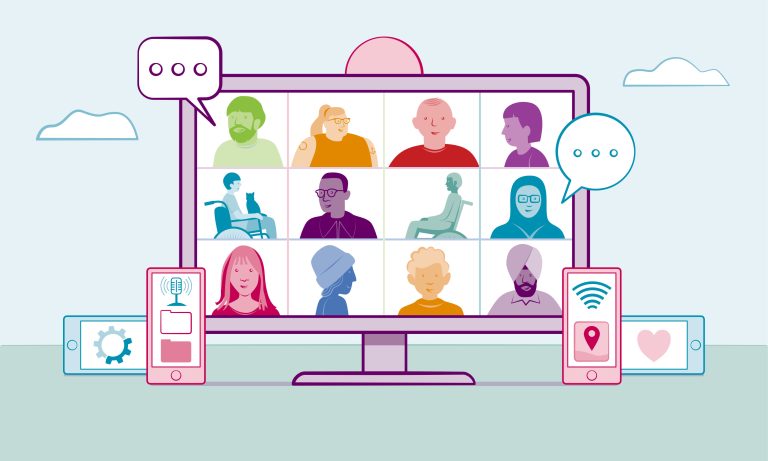
Digital health care can unlock more self-care options for citizens, but let’s not leave anyone out in the cold.
Digital
Definition: Using or relating to digital signals and computer technology.
There’s been a big change in how we do lots of things using digital technology. The last few years has seen a big jump in people’s use of digital technology – especially as a result of the COVID-19 pandemic. For ordinary things in daily life – shopping, bank transactions, music, staying in touch – using technology is a norm for many. But, how are we using digital resources for our health and well-being? And who is ‘digitally included’ or not? And how do we support people living with long-term conditions to navigate this new landscape?
The Scottish Government is committed to a long-term plan to deliver transformational changes in digital health and social care services. The ambition is to create more ways for us to use digital technology to help us look after our health. There’s a desire to give people more control and choice in using digital health and social care services – from smart phones, laptops or iPads. And there is already a lot of progress in this field – making medical appointments; ordering repeat prescriptions and clinical video consultations have all significantly increased in their use.
But not everyone can or will choose digital health care. There are challenges to face – inclusion, awareness and accessibility. There needs to be a focus on how to avoid creating a digital health inequality. We need to recognise that not all citizens can make informed decisions about digital health solutions. Some ‘don’t know what they don’t know’; others don’t have the resources to invest in digital healthcare solutions. For example, someone living with a long-term condition, in poverty, from an ethnic minority background will face many barriers to accessing services digitally. The strategic priority is well placed but needs to continually be informed by a broad cross section of citizens.
At the ALLIANCE, the Digital Hub team works to ensure that Digital Citizen Panel (DCP) members are equal partners in the development of the Scottish Government’s Digital Health and Social Care Strategy. The panel has just under 100 members across Scotland. They share their experiences using digital technology for their health needs and/or for those who they care for or serve. They’ve been a key contributor to the Strategy and continue to influence the direction of travel while Scotland pioneers new ways to offer new digital healthcare solutions. But the really important part is that our DCP members hear about what changes to the Strategy they’ve contributed to and what will be done differently as a result of their input.
In a recent survey, DCP members rated digital inclusion as a high priority. They express that many people are unaware of or are unwilling to use digital technology to support their health. Some DCP members support communities where deprivation, poor network coverage or a disability are issues that can seem insurmountable. Digital inclusion looks like a far off prospect for some of the people the voluntary sector serves. So how do we ensure that people can get ‘a foot in that digital front door’?
Some of the work at the ALLIANCE focuses on engaging with people to raise digital awareness and confidence to use technology. Our DCP members are enthusiastic about inviting the Digital Hub team to their local communities to run sessions and talks. We’re taking booking for a number of Discover Digital roadshows/workshops that will bring free sessions to local venues for local people.
We also support communities to know where and what their local digital assets are. Our team’s ALISS project (A Local Information System for Scotland) is an innovative platform that lists organisations and activities to support wellbeing. Community hubs, libraries and faith organisations are all excellent venue choices for making digital resources more accessible and close to where people live, and many are listed on ALISS.
Lastly, there’s the concept of choice. Choice needs to come from a place of making decisions that are informed. And choosing non-digital preferences should not affect the quality of care someone receives. Our Digital Human Rights principles promotes the idea of digital choice or not – without the consequence of care being affected.
Our advance on the path of using digital options for our health and wellbeing is strong. It’s now up to all of us to help create the right environment for anyone who wants and needs to open that ‘digital front door’. Or not.
Call to Action
If you are interested in hearing more about the Digital Citizen Panel or in bringing digital awareness activities to your community get in touch with the ALLIANCE Digital Network Officer, Gozie:
Email: Chigozie.joeadigwe@alliance-scotland.org.uk
Mobile: 07485 377 769
Landline: 0141 404 0231
Address: The Health And Social Care Alliance, Venlaw Building, 349 Bath Street, Glasgow G2 4AA
End of page.
End of page.
You may also like:
A child cannot truly feel safe in a school or community if they do not feel that they belong.
Continue readingFor 20 years, The ALLIANCE has listened to member voices to help protect and improve Scotland's care services.
Continue readingWith the ALISS Customisable Map Tool, organisations can share info about community resources in ways that work for the people they support.
Continue readingIrene Mackintosh, CEO at Mhor Collective shares highlights and hopes for rights in a digital age.
Continue readingIn her latest TFN column, our Chief Officer Sara Redmond reflects on the proposal to collapse Scotland's 14 regional health boards into two.
Continue readingWhen we listen to lived experience, we create better resources, challenge assumptions and help create safer communities for everyone.
Continue readingGozie reflects on supporting citizen engagement, digital inclusion and hopes for the future.
Continue readingDCP member and Project Co-ordinator Esther Misajel shares Pachedu's journey towards digital inclusion.
Continue readingChris Mackie, Director of Digital, reflects on what ALISS has achieved so far this year and shares what is still to come.
Continue readingAt the ALLIANCE and beyond, true and meaningful policy reform means turning people's experiences into lasting action on the ground.
Continue readingGLP-1s can transform health but without adequate wraparound support, weight loss may come at the cost of nutrition, muscle and wellbeing.
Continue readingSheila Duffy, Chief Executive of ASH Scotland, is appealing for support for proposals to restrict tobacco, vapes and nicotine products.
Continue readingBilly McClean reflects on why SCIC26 offers a vital opportunity to learn together, share what works, and shape the future of integrated care
Continue readingTo mark the ALLIANCE's 20 year anniversary Paul Okroj reflects on the importance of supported self management.
Continue readingTo mark Scottish Learning Disability Week (7 - 13 September), Bruce Adamson reflects on this year's call to action.
Continue readingIn her latest TFN column, our Chief Officer Sara Redmond reflects on the current state of social care in Scotland.
Continue readingKicking off September for the ALLIANCE's 20 year anniversary, Grace reflects on the Self Management Programme
Continue readingSara Redmond, ALLIANCE Chief Officer, on the priorities for 2026's Programme for Government.
Continue readingSandra Auld reflects on the ALLIANCE's people focused impact, collaboration, lived experience, campaigns and lasting change in Scotland.
Continue readingMark shares his experience with gambling harms, and how this intersected with the launch of the ALLIANCE's ScotRGH programme in 2020.
Continue readingProfessor Anna Glasier celebrates 20 years of the ALLIANCE and it's vital role in shaping the Women's Health Plan for Scotland.
Continue readingSara Redmond, ALLIANCE Chief Officer, on the challenges faced by community-led health organisations in delivering prevention.
Continue readingAnnie shares her experience of youth politics, and how SAFE has helped her make connections and makes sense of the world of politics.
Continue readingChloe Craig reflects on how we have helped connect Scotland’s lived experience voice to conversations happening beyond our borders.
Continue readingDr Irene Oldfather reflects on two decades of growth, collaboration, and person centred impact across Scotland and beyond.
Continue reading