
Peer Support Workers – for such a time as this
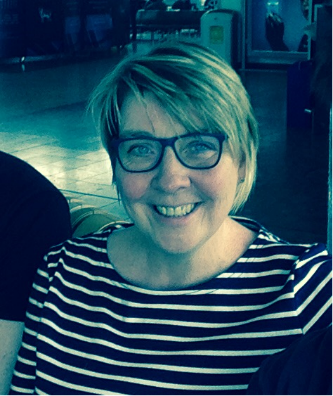
- Written by: Trish O'Brien — Fife Voluntary Action — Mental Health Peer Support Network Co-ordinator
- Published: 26th June 2020

As part of Employability Day 2020, read why the role of peer support workers will be vital in supporting people in a post-COVID world.
We are living in a time where we are making history, finding new ways to live and work and communicate with each other. At first, I was devastated at the lockdown situation as I had only just started my job with Fife’s third sector interface, Fife Voluntary Action, in January and was all set to have Fife’s first ‘Peer Support Network Gathering’ on the 22nd of March’. This of course was cancelled!!
My anxiety levels hit the roof! So many questions and doubts running through my head…..How can we build a meaningful network to co-design and co-produce a model for delivering peer support in a ‘virtual’ socially distancing world? How can we achieve our outcomes in this situation? How do I connect with people I have never even met yet and can’t meet? How do we maintain the momentum of the existing partner group when we had only officially met together twice? Can we have a meaningful conversation without being in the same room?…and so on….
Peer support certainly is not a new concept, it’s been around for a very long time. Recognition of the value of peer support among people with severe mental illnesses goes back centuries, with the practice showing up periodically and with good effect throughout the history of psychiatry. More recently the practice of peer support has rapidly grown throughout the world with many people with lived experience being employed to provide peer support.
“Peer support is not like clinical support, nor is it just about being friends. Unlike clinical help, peer support helps people to understand each other because they’ve ‘been there’ shared similar experiences and can model for each other a willingness to learn and grow. In peer support people come together with the intention of changing unhelpful patterns, getting out of “stuck” places and building relationships that are respectful, mutually responsible, and potentially mutually transforming.” (Mead and MacNeil, 2003)
Bearing in mind how I was and still am feeling at times, I can imagine that many others have struggled with this ‘new normal’ finding ourselves isolated and frustrated at the limitations imposed on us. I am sure, if we were to be entirely honest, most of our mental wellbeing has taken a bit of a bashing. I have found my own self talk harsh – ‘Just get on with it…’ ‘There are others who are worse off than me…’. ‘Get a grip…’ I must admit it is really difficult to concentrate on more than one thing at a time, to remember things that are said during ZOOM meetings or on the phone and to feel like I have been productive at the end of each day.
How good would it be if we felt able to share our experiences wholeheartedly and authentically without fear of judgement in the workplace. Imagine if there were people employed by your employer, by your GP or health worker, by your support agency etc to facilitate such discussions and to journey with you while you go through your struggles to recover from the repercussions of the pandemic or whatever caused your mental wellbeing to be impaired.
This is our aim in Fife to facilitate and mobilise a network of likeminded people with lived experience of mental ill health to create and increase opportunities for statutory and voluntary services to engage and employ Mental Health Peer Support Workers. For such a time as this. I believe there has never been more need for an army of peer support workers in the workplace, in health and social care services, in the Public Sector and in our communities than right now!
End of page.
You may also like:
Billy McClean reflects on why SCIC26 offers a vital opportunity to learn together, share what works, and shape the future of integrated care
Continue readingTo mark the ALLIANCE's 20 year anniversary Paul Okroj reflects on the importance of supported self management.
Continue readingTo mark Scottish Learning Disability Week (7 - 13 September), Bruce Adamson reflects on this year's call to action.
Continue readingIn her latest TFN column, our Chief Officer Sara Redmond reflects on the current state of social care in Scotland.
Continue readingKicking off September for the ALLIANCE's 20 year anniversary, Grace reflects on the Self Management Programme
Continue readingSara Redmond, ALLIANCE Chief Officer, on the priorities for 2026's Programme for Government.
Continue readingSandra Auld reflects on the ALLIANCE's people focused impact, collaboration, lived experience, campaigns and lasting change in Scotland.
Continue readingMark shares his experience with gambling harms, and how this intersected with the launch of the ALLIANCE's ScotRGH programme in 2020.
Continue readingProfessor Anna Glasier celebrates 20 years of the ALLIANCE and it's vital role in shaping the Women's Health Plan for Scotland.
Continue readingSara Redmond, ALLIANCE Chief Officer, on the challenges faced by community-led health organisations in delivering prevention.
Continue readingAnnie shares her experience of youth politics, and how SAFE has helped her make connections and makes sense of the world of politics.
Continue readingChloe Craig reflects on how we have helped connect Scotland’s lived experience voice to conversations happening beyond our borders.
Continue readingDr Irene Oldfather reflects on two decades of growth, collaboration, and person centred impact across Scotland and beyond.
Continue readingDisabled people are some of those who suffer most in crises but are ignored in planning. Our 6-step model builds justice throughout.
Continue readingMaisie Peebles shares her experience working with Aberdeenshire Public Health Team on a ‘digital conversations’ project.
Continue readingSara Redmond, ALLIANCE Chief Officer, on why the Scottish Government and parties must seize the opportunity for change.
Continue readingDirector of the Links programme, Roseann, discusses why we need to focus on person centred care, and why the programme is central to this.
Continue readingReflections on the ALLIANCE Integration in Action: Inclusive Leadership event.
Continue readingWhat does The Scottish Report tell us about how we're supporting people with inflammatory mediated autoimmune conditions (IMIDs)?
Continue readingAvril McLean from Action from ME shares new resources designed to support professionals understand the impact of ME on people's lives.
Continue readingMandy Wright from Home Energy Scotland shares how partnerships positively impact their work.
Continue readingToo many young people are falling through the mental health support gap. How do we fix the "Missing Middle"?
Continue readingJoe McCready from Carers UK shares how important their annual survey is, and why it is invaluable for unpaid carers to have their say.
Continue readingColette reflects on the last 12 years of the Community Links Worker programme, as well as her own experience of being a CLW.
Continue readingWith the current World Cup, gambling presents an even higher risk. How can we prevent young people from getting tangled in this web?
Continue reading