
Transition and transformation in social care
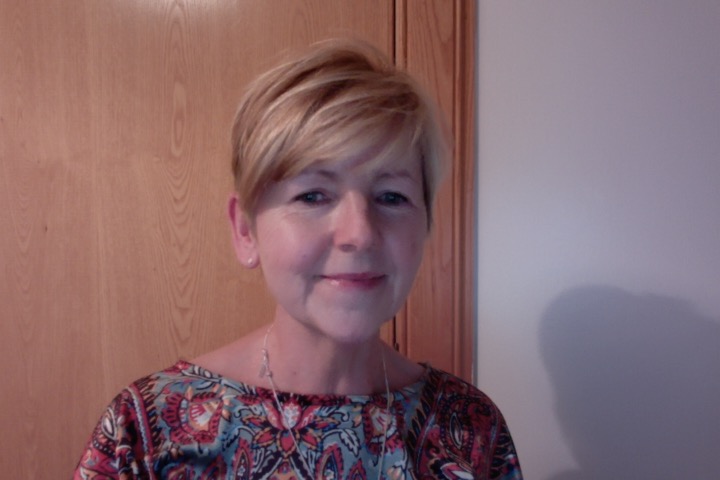
- Written by: Cath Cooney — International Futures Forum — Development Director
- Published: 8th December 2021

Cath Cooney shares her views on the transformation that must happen now and in the future to realise Scotland's ambitions for social care.
Powerful narratives paint a realistic picture of the systems at play: entrenched ways of working, inequitable provision and accountability and loss of local responsiveness across civic society; and some signs of hope of in the examples of communities where we are seeing the potential of the future play out now[1].
My standpoint is from a human systems approach, looking at social care as an area of concern, and wondering how a future perspective approach could help us get in to a more authentic, collaborative space for change.
As Scotland, and the world, looks to COVID recovery and renewal, we hear aspirations of a transformative response, such as in the recent RSE Futures Commission Report.
In my work with International Futures Forum[2], there is a focus in transformative innovation as a practice that can support systemic transition – building the plane even as we fly it. I’m seeing how the use of a three horizons framework[3] is helping individuals, communities, organisations and NGOs look across the landscape of change, through the lens of three perspectives on the future potential of the present moment. It helps move towards building the infrastructure of a third horizon rather than sustaining a failing first horizon. I hear this language coming through in recent commentary[4] ‘this needs to go hand in hand with changes to current structures, rather than throwing money on top of systems that don’t work’.
But of course, we’re now in the weeds of it, facing deep challenge and risk in making a National Care service a reality that holds true in the face of what feels like intractible obstacles. We face immediate and acute challenges alongside the inevitability of long-term shifts in patterns of operation. Systems, all systems it seems, are in transition. These are powerful times and we need a compass and a map.
Scanning for where we might get a sense of a map and find clues about the success paths we need to take; I’m encouraged to a degree.
Some of that futures insight was embedded in the Feeley [5]Recommendations.
The problem isn’t that we don’t have good ideas; it’s we haven’t acted on them at scale and with genuine commitment…we rely too much on bottom-up developments that we expect to flourish without systemic support.
The re-issuing of 12 Propositions for Social Care from the ALLIANCE is indeed prescient with its central themes of ‘commissioning, coproduction, personalisation, human rights, improvement, culture change and governance for change’.
In his latest book, Facilitating Breakthrough[6], Adam Kahane talks about about the practice of ‘transformative facilitation’ – how to remove obstacles, bridge differences and move forward together towards shared goals. Crucially, he talks about the nature of those ‘shared goals’ as being about ‘learning to live together in a way that love, power and justice enhance and support one another’.
As we look to the new care service, I hear a call for local and national infrastructure that supports love, power and justice.
Transformative facilitation is not getting participants to working together but helping them remove the obstacles to doing so. You can’t push a stream to flow, but if you remove the blockages, it will flow by itself. [7]
Many blockages exist in making the National Care Service fit for the 21st Century, can we see where such transformative facilitation is happening and effective in this space?
The 12 Propositions for Social Care paper highlights the need to drive forward at pace. Could a transformative facilitation approach be a source of some much-needed forward momentum?
[1] https://scottishcommunityalliance.org.uk/2021/08/31/local-accountability-is-the-key/
[2] https://www.internationalfuturesforum.com
[3] https://www.iffpraxis.com/three-horizons
[4] https://www.scotsman.com/news/opinion/columnists/current-care-systems-arent-working-for-people-they-serve-and-need-radical-change-professor-ian-welsh-obe-3442202
[5] https://www.gov.scot/groups/independent-review-of-adult-social-care/
[6] https://reospartners.com/reos-management/adam-kahane/
[7] https://reospartners.com/reos-management/adam-kahane/
End of page.
You may also like:
Dr Anthony McMahon reflects on the importance of the Community Links Worker within his GP surgery - and why it makes all the difference.
Continue readingAs part of our 20 year anniversary, the Integration Team highlight the importance of our Connected Communities series.
Continue readingTo mark ‘What matters to you?’ Day, The ALLIANCE's Barbara Flynn considers the impact of Tommy Whitelaw’s talks for nurses and midwives.
Continue readingThe ALLIANCE’s Humans of Scotland project works to challenge stigma.
Continue readingIn her latest TFN column, our Chief Officer Sara Redmond reflects on post election feelings and Scotland’s future.
Continue readingALLIANCE Chief Officer, Sara Redmond, reflects on our Annual Conference 2026 and how we're turning hope into action.
Continue readingALLIANCE member, Catherine, shares the importance of initiatives like 'What Matters To You?' Day in promoting person centred care.
Continue readingLearn about how the ALLIANCE has championed joined-up, person centred care.
Continue readingDementia Action Week highlighted some great resources and support for people living with dementia and their family, friends, and carers.
Continue readingSteven Mair gives us an insight into his role as a gamer at the Glasgow Children’s Hospital Charity.
Continue readingSince 2009, ALISS has helped people find local health and wellbeing support. Any group, big or small, can add their information.
Continue readingThe new Scottish Government must turn promises into action to improve hospice and palliative care
Continue readingTogether, we can create lasting change for everyone living with Crohn’s or Colitis.
Continue readingFind out more about these digital self management tools and how to get in touch to arrange an information session.
Continue readingOur Chief Officer Sara Redmond addresses recent commentary on the relationship between Government and the Third Sector.
Continue readingCornell explores how we can build an environmental human rights-based culture
Continue readingLouise Coupland, Digital Health and Social Care Programme Manager shares her opinions on the national roll out of MyCare.scot.
Continue readingChris Mackie, Director of Digital, looks back at how ALISS has developed, grown, and innovated over time.
Continue readingCrohn’s and Colitis care in Scotland is at a pivotal moment. Urgent action is needed to tackle delays and poor access to vital services
Continue readingThe ALLIANCE’s Lewis Shaw reflects on the importance of rehabilitation support.
Continue readingIsabella Goldie of Deafblind Scotland reflects on the value of partnership work.
Continue readingFind out more about the inaugural Power of Attorney Day taking place on 22 April 2026.
Continue readingDr Hannah Tweed reflects on 20 years of the Scottish Sensory Hub, the important work they do and why it matters.
Continue readingAs part of our 20 year anniversary, Kerry shares her reflections on how far the ALLIANCE has come, our achievements, and our impact.
Continue readingIn her latest TFN column, our Chief Officer Sara Redmond reflects on 20 years since Scotland moved to put children at the centre of policy.
Continue reading