
The views of an integration authority carers’ representative
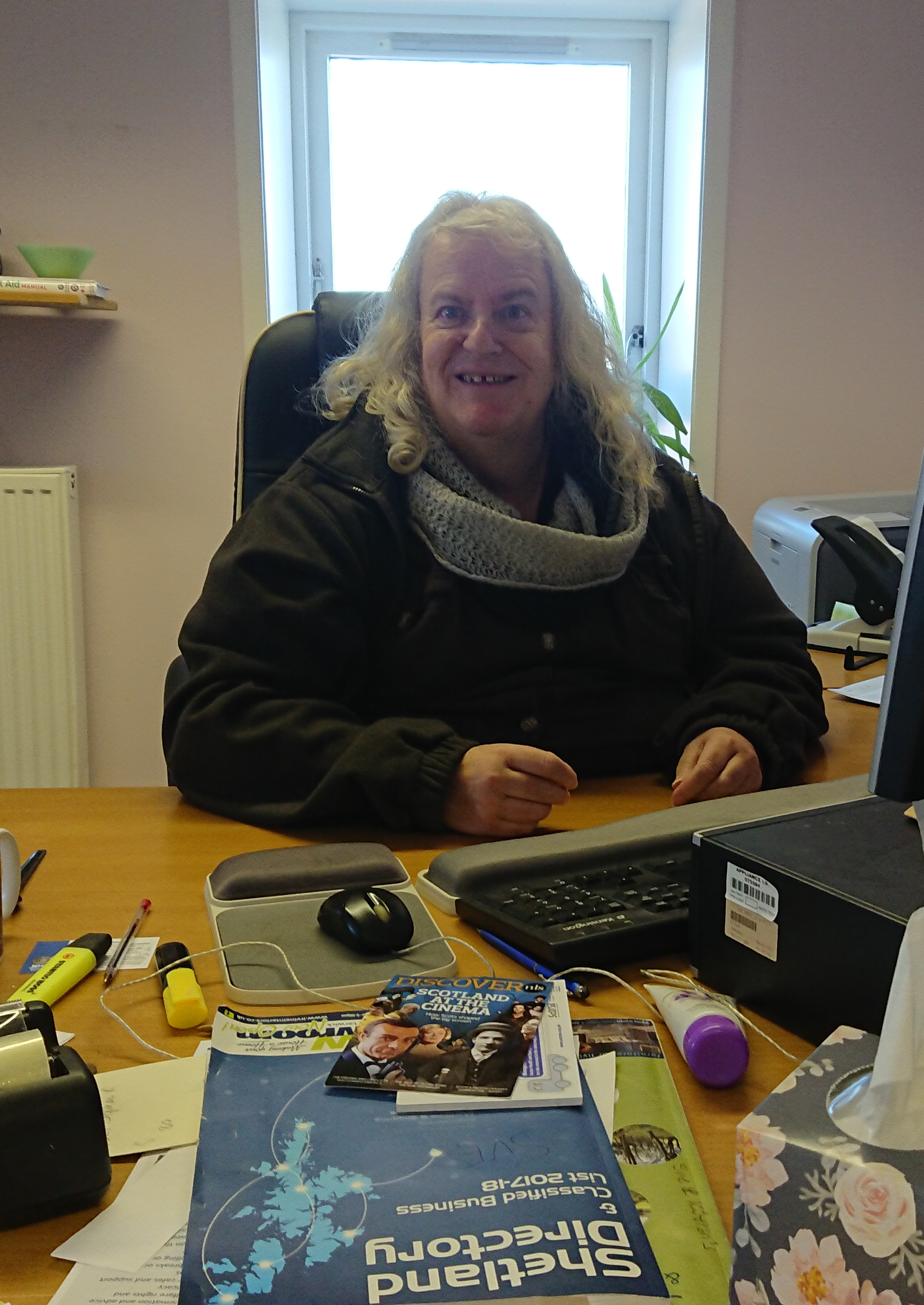
- Written by: Sue Beer — Shetland Island's Integration Joint Board — Former Carers’ Representative
- Published: 17th June 2018

Based on her prior membership of the Shetland Islands IJB, Sue shares her thoughts on integration.
In addressing my views on health and social care integration, I am focusing on my previous role of acting as a stakeholder representative on our local joint integration authority, and noting improvements that have developed over the life of the authority.
Until February 2018, I was the carers’ representative on the Shetland Islands Integration Joint Board (IJB); fortunately, we were successful in recruiting a new carers’ rep since I ceased being a carer in February 2017. I have been actively encouraged by the IJB Chair and Lead Officer to mentor the incoming representative, and attended seminars and IJB meetings with him as well as personally ensuring that he can contact me with any queries.
I joined the Community Health Partnership Committee of the Shetland NHS Health Board in 2011 as Carers Representative, sponsored by the then Shetland Carers Link-Group, now Shetland Carers Strategy Group. I was fortunate to have received training for this role, with other Scottish carer representatives, from Marion McParland, then of the Scottish Government Carers Policy Unit, and Claire Cairns of the Coalition of Carers in Scotland. When the IJB started up, it was agreed that the three then stakeholder representatives from the CHP be retained.
I am now a substitute, for both the Carers and the Third Sector representatives to the IJB, should either rep be unable to attend (I work for the local Third Sector Interface). I get the papers electronically for all the meetings, but only get printed papers when it is known in advance that I will be attending; I am also invited to attend the seminars and other knowledge sharing events. This means that when the normal reps are unavailable, someone is going into the meeting who has the knowledge and experience both to ask relevant questions and to feed back to their stakeholder group. Official substitutes are also in place for voting members from both the Local Authority and the Health Board. This recognition of formal substitutes is a useful improvement on the earlier process, where substitutions were requested formally through the chair on a meeting-by-meeting basis, giving the name of the person who would be the substitute and officially requesting from the Chair that they be allowed to attend when absences were known in advance. It is particularly useful for carers’ representatives, as carers tend to be on call 24/7 and can rarely guarantee availability.
Membership of IJB voting members has undergone a great deal of change; only one of the three health board members (the current Chair) has been in place since the Board’s inception; none of the local authority members predates the 2017 local authority election. The public/service user representative slot was unfilled for over a year; the previous incumbent (who volunteers for a number of public roles) found that the quantity of reading required in preparation for the meetings was too onerous.
For stakeholder representatives where both attendance at meetings and keeping up with papers is not a role for which they are remunerated, this can be a very time-consuming consideration. Again, we have improvements in place; there is an understanding that we do not have the same facilities for printing out papers so we are furnished with hard copy, but we do not have the same iPads that the majority of members have as part of their employment. I have ensured that there is a proper system in place for the reimbursement of traveling expenses for the incoming carers’ rep, as this had not been previously addressed.
Some stakeholder representatives have voiced their concern that not having a voting role on their integration authority means that they do not have a proper voice. For me, I felt that not having that responsibility was quite liberating, and in any case, there is the expectation (not always realised) that there will be a consensus.
As a carers’ representative I have also been invited to meetings of the ‘Carers Collaborative’, developed and facilitated by the Coalition of Carers in Scotland; this is a national forum for IJB carers’ reps where peer support and the sharing of good practice has helped to strengthen the representation that we can provide.
In common with other carers’ reps the extent to which individual carers’ views and needs can be taken forward to meetings is limited, but what is critical is that, in the consideration of policy and service provision, carers’ needs in general are catered for and that carers are included in strategy documents; I see this as the main role of the carers’ representative. Some carers’ reps have a place on their IJB’s agenda committees; we have no such committee, and until recently had no mechanism for adding items to the agenda, but we do now have the opportunity, when reviewing the forthcoming Business Programme of the Board, to ask for the inclusion of germane agenda items at future dates.
The final improvement in my time that I would like to highlight has been our current Chair’s public statement that all members, whether voting or non-voting, have their part to play in the board meetings, and that as well as representing their designated interest they have a proper role in questioning and commenting on any matters that come before the board.
Sue Beer can be found on Twitter at: @BeerSue
Sue’s Opinion is part of the ALLIANCE’s ‘We Need To Talk About Integration’ anthology which is available at the link below.
End of page.
You may also like:
A child cannot truly feel safe in a school or community if they do not feel that they belong.
Continue readingFor 20 years, The ALLIANCE has listened to member voices to help protect and improve Scotland's care services.
Continue readingWith the ALISS Customisable Map Tool, organisations can share info about community resources in ways that work for the people they support.
Continue readingIrene Mackintosh, CEO at Mhor Collective shares highlights and hopes for rights in a digital age.
Continue readingIn her latest TFN column, our Chief Officer Sara Redmond reflects on the proposal to collapse Scotland's 14 regional health boards into two.
Continue readingWhen we listen to lived experience, we create better resources, challenge assumptions and help create safer communities for everyone.
Continue readingGozie reflects on supporting citizen engagement, digital inclusion and hopes for the future.
Continue readingDCP member and Project Co-ordinator Esther Misajel shares Pachedu's journey towards digital inclusion.
Continue readingChris Mackie, Director of Digital, reflects on what ALISS has achieved so far this year and shares what is still to come.
Continue readingAt the ALLIANCE and beyond, true and meaningful policy reform means turning people's experiences into lasting action on the ground.
Continue readingGLP-1s can transform health but without adequate wraparound support, weight loss may come at the cost of nutrition, muscle and wellbeing.
Continue readingSheila Duffy, Chief Executive of ASH Scotland, is appealing for support for proposals to restrict tobacco, vapes and nicotine products.
Continue readingBilly McClean reflects on why SCIC26 offers a vital opportunity to learn together, share what works, and shape the future of integrated care
Continue readingTo mark the ALLIANCE's 20 year anniversary Paul Okroj reflects on the importance of supported self management.
Continue readingTo mark Scottish Learning Disability Week (7 - 13 September), Bruce Adamson reflects on this year's call to action.
Continue readingIn her latest TFN column, our Chief Officer Sara Redmond reflects on the current state of social care in Scotland.
Continue readingKicking off September for the ALLIANCE's 20 year anniversary, Grace reflects on the Self Management Programme
Continue readingSara Redmond, ALLIANCE Chief Officer, on the priorities for 2026's Programme for Government.
Continue readingSandra Auld reflects on the ALLIANCE's people focused impact, collaboration, lived experience, campaigns and lasting change in Scotland.
Continue readingMark shares his experience with gambling harms, and how this intersected with the launch of the ALLIANCE's ScotRGH programme in 2020.
Continue readingProfessor Anna Glasier celebrates 20 years of the ALLIANCE and it's vital role in shaping the Women's Health Plan for Scotland.
Continue readingSara Redmond, ALLIANCE Chief Officer, on the challenges faced by community-led health organisations in delivering prevention.
Continue readingAnnie shares her experience of youth politics, and how SAFE has helped her make connections and makes sense of the world of politics.
Continue readingChloe Craig reflects on how we have helped connect Scotland’s lived experience voice to conversations happening beyond our borders.
Continue readingDr Irene Oldfather reflects on two decades of growth, collaboration, and person centred impact across Scotland and beyond.
Continue reading