
Views from local government on integration
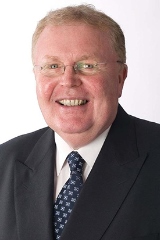
- Written by: Councillor Peter Johnston — COSLA (Convention of Scottish Local Authorities) — Health and Social Care Spokesperson
- Published: 17th June 2018
Integration can lead the way in demonstrating how cross-agency, locally planned and delivered services can serve our communities best.
Integration offers Scotland a unique opportunity to achieve innovative and transformational change across the whole health and social care system and I am proud of Local Government’s role in driving the agenda forward. Now into my second term as the COSLA Spokesperson for Health and Social Care, I have witnessed tremendous commitment from councils to make integration a reality and I am pleased that – for the most part – Local Government has been treated as an equal partner with the Scottish Government throughout the process.
Speaking as a councillor, you would expect me to see integration from a ‘Local Government perspective’ and at COSLA we are often asked what Local Government wants from health and social care integration. The simple and honest answer is that we want to deliver a system that works for communities, delivers outcomes for people and continues Scotland’s journey towards public sector reform.
To achieve meaningful change requires a mandate from both Scottish Ministers and locally elected members who provide democratic accountability to the whole of the health and social care system in Scotland. As such, partnership between these two spheres of government in Scotland is fundamental to success and I believe we have done well to foster a sense of joint ownership of the agenda at a national level.
That partnership is crucial to overcoming the challenges that still exist within integration, of which there remain several. Among these challenges is the fact that Integration Authorities must be further empowered and must develop greater autonomy if we are to really achieve what is set out in the law. This requires a degree of concession by both local authorities and NHS Boards and a clear example of where this has not yet been achieved is in relation to unscheduled care budgets.
Another area for attention is the profile of social care, which must be raised and continuously promoted across the integration agenda. A frustration within Local Government is often that social care is seen as an afterthought or, worse, a means to the end of generating savings in acute care or alleviating delayed discharge. Of course, efficiencies through joined-up service provision are an important benefit of integration but we must also look at social care as a valuable service in itself. One which not only provides dignified care to those who need it and enables people who need support to live as full, active citizens who contribute to the economic and social wellbeing of our communities, but also as a valuable industry to the economy which can offer meaningful and rewarding work.
To compound the problem, there continues to be a professional and cultural gap between health and social care and we are working with the Scottish Government and others to bridge that gap by making social care an attractive career choice and looking to develop a shared approach to development and leadership. I hope that our work to deliver the National Workforce Plan will galvanise our efforts to invest in the social care profession.
This must include the third and independent sector providers on whom we rely and, in many cases, whose employees we are referring to when we talk about the workforce.
Finally, I want to emphasise the fact that integration is ultimately a local agenda and emphasise its significance as part of the broader public sector reform landscape. In this sense, health and social care integration can lead the way in demonstrating how cross-agency, locally planned and delivered services can serve our communities best; but it is also important for Integration Authorities and the NHS at large to continue to see itself as a community planning partner above all. That way we maintain the focus on outcomes for communities rather than on organisational structures or on what is, and what is not, a delegated service. To achieve this, an important step change we must continue to encourage is the shift from central commitments centred on inputs to focusing on outcomes and sustainability across the public sector.
Above all, though, we must continue to remind ourselves that integration is a process that requires constant attention and commitment at all levels to succeed. Setting up the structures is a small part of the picture – it is the responsibility of elected members, senior managers and practitioners across the system to continue to make our vision for integrated health and social care a reality.
COSLA can be found on Twitter at @COSLA (this link will take you away from our website).
Peter’s Opinion is part of the ALLIANCE’s ‘We Need To Talk About Integration’ anthology which is available at the link below.
End of page.
You may also like:
A child cannot truly feel safe in a school or community if they do not feel that they belong.
Continue readingFor 20 years, The ALLIANCE has listened to member voices to help protect and improve Scotland's care services.
Continue readingWith the ALISS Customisable Map Tool, organisations can share info about community resources in ways that work for the people they support.
Continue readingIrene Mackintosh, CEO at Mhor Collective shares highlights and hopes for rights in a digital age.
Continue readingIn her latest TFN column, our Chief Officer Sara Redmond reflects on the proposal to collapse Scotland's 14 regional health boards into two.
Continue readingWhen we listen to lived experience, we create better resources, challenge assumptions and help create safer communities for everyone.
Continue readingGozie reflects on supporting citizen engagement, digital inclusion and hopes for the future.
Continue readingDCP member and Project Co-ordinator Esther Misajel shares Pachedu's journey towards digital inclusion.
Continue readingChris Mackie, Director of Digital, reflects on what ALISS has achieved so far this year and shares what is still to come.
Continue readingAt the ALLIANCE and beyond, true and meaningful policy reform means turning people's experiences into lasting action on the ground.
Continue readingGLP-1s can transform health but without adequate wraparound support, weight loss may come at the cost of nutrition, muscle and wellbeing.
Continue readingSheila Duffy, Chief Executive of ASH Scotland, is appealing for support for proposals to restrict tobacco, vapes and nicotine products.
Continue readingBilly McClean reflects on why SCIC26 offers a vital opportunity to learn together, share what works, and shape the future of integrated care
Continue readingTo mark the ALLIANCE's 20 year anniversary Paul Okroj reflects on the importance of supported self management.
Continue readingTo mark Scottish Learning Disability Week (7 - 13 September), Bruce Adamson reflects on this year's call to action.
Continue readingIn her latest TFN column, our Chief Officer Sara Redmond reflects on the current state of social care in Scotland.
Continue readingKicking off September for the ALLIANCE's 20 year anniversary, Grace reflects on the Self Management Programme
Continue readingSara Redmond, ALLIANCE Chief Officer, on the priorities for 2026's Programme for Government.
Continue readingSandra Auld reflects on the ALLIANCE's people focused impact, collaboration, lived experience, campaigns and lasting change in Scotland.
Continue readingMark shares his experience with gambling harms, and how this intersected with the launch of the ALLIANCE's ScotRGH programme in 2020.
Continue readingProfessor Anna Glasier celebrates 20 years of the ALLIANCE and it's vital role in shaping the Women's Health Plan for Scotland.
Continue readingSara Redmond, ALLIANCE Chief Officer, on the challenges faced by community-led health organisations in delivering prevention.
Continue readingAnnie shares her experience of youth politics, and how SAFE has helped her make connections and makes sense of the world of politics.
Continue readingChloe Craig reflects on how we have helped connect Scotland’s lived experience voice to conversations happening beyond our borders.
Continue readingDr Irene Oldfather reflects on two decades of growth, collaboration, and person centred impact across Scotland and beyond.
Continue reading