
What hope can human rights in Scotland give to people with progressive neurological conditions?
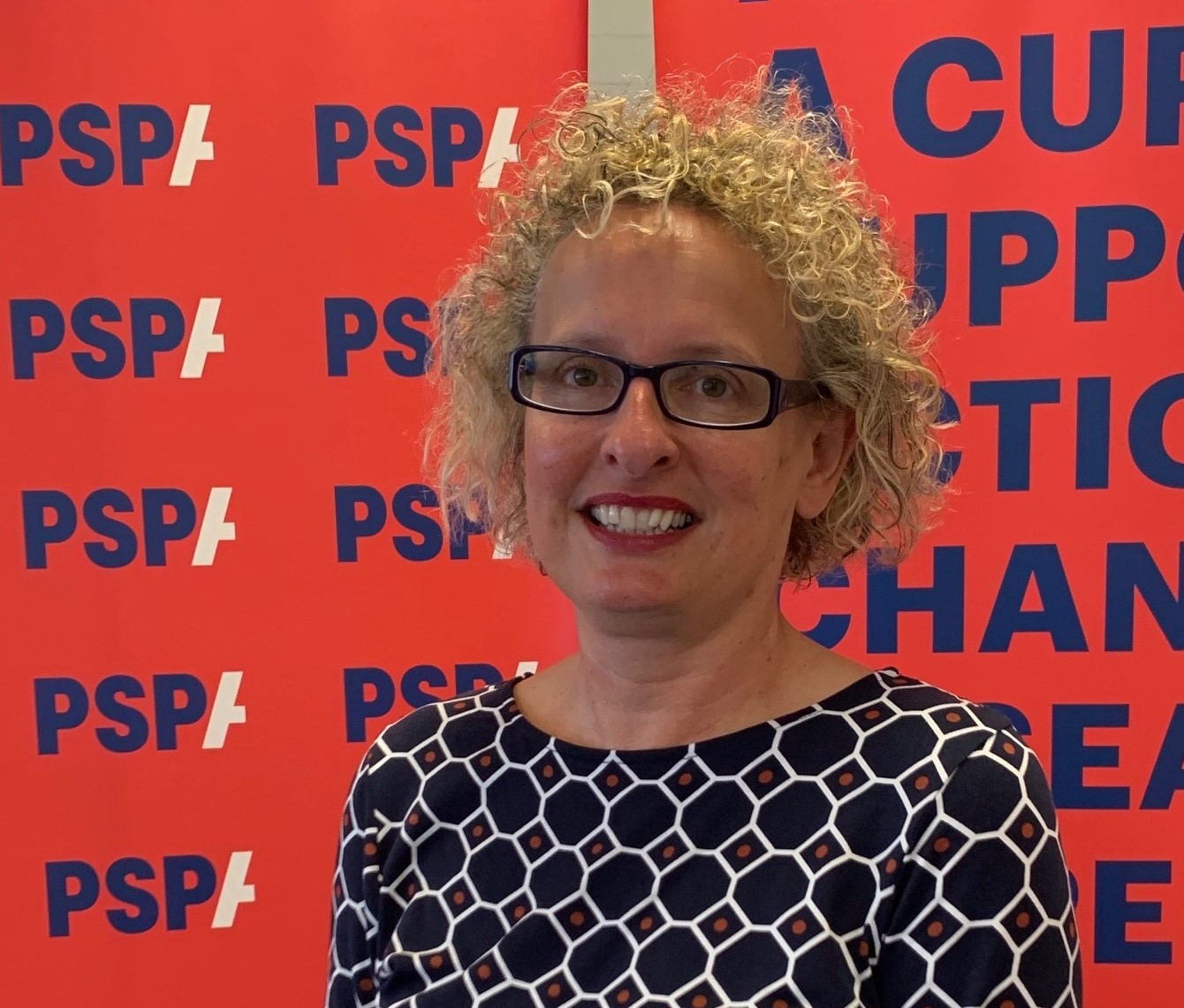
- Written by: Gill Dickson — PSPA — Country Manager Scotland
- Published: 30th June 2021
Gill Dickson from PSPA shares her reflections on the ALLIANCE Annual Conference session on A Scottish Human Rights Bill.
Progressive Supranuclear Palsy (PSP) & Corticobasal Degeneration (CBD) are progressive neurological conditions caused by the premature loss of nerve cells in certain parts of the brain. These conditions currently have no cure. PSPA believes there to be as many as 10,000 people living with these conditions in the UK and over 800 in Scotland.
With this in mind, I attended the session ‘A Scottish Human Rights Bill: Putting rights into law and action’ at the ALLIANCE Annual Conference hopeful that the discussion would be ultimately really meaningful to the people that PSPA support who are living with PSP & CBD.
The first thing that became clear when listening to the first speaker, Mhairi Snowden from Human Rights Consortium Scotland, was that there is little point to having a comprehensive system of economic, social and cultural human rights embedded in Scots law if individuals are not aware of them. According to Mhairi, the exciting plans for the Human Rights Bill, which will incorporate four major international human rights treaties into Scots law, will change the way decisions are made and empower individuals and communities. The listening audience agreed that for this process to have true co-production, people with lived experience must be involved. Alex Thorburn shared his experience of good practice in this in The Lived Experience Leadership Group of the Scottish Human Rights Commission. Not everyone with experience can take part in such a group so what does it mean for people with conditions such as PSP & CBD when they are not able to actively engage in this process? They may be having experiences that inform their views on rights, such as the right to live in a healthy environment as described in the session by Dr Shivali Fifield from the Environmental Rights Centre for Scotland, but people living with progressive neurological conditions can sometimes spend most of their energy managing their conditions or coordinating their care and support and because of this can be forgotten.
If the first issue is that there are barriers for people with worsening conditions who might want to contribute to the production of legislation, the next challenge comes if they need to challenge when things go wrong. For this to be successful, people both need to know what their rights are and how to get remedy and restitution in order to exercise them. Heather Fiskin from Inclusion Scotland describes Scotland as more averse to litigation compared to England with the result of more case law being drawn on south of the Border.
For a challenge to be successful there needs to be available advocacy and support. However, an advocate supporting someone living with either PSP or CBD would need to be familiar with these conditions, particularly in the way they can manifest communication, capacity and cognition difficulties.
There is also likely to be a prohibitive cost involved in going to court. This can only be solved by sign-up at governmental level to ensure that the wealth of policy created around human rights is matched with solid accountability for their expression and delivery.
There is a really important role for third sector organisations going forward. PSPA is well positioned as the only charity in the UK dedicated to supporting people living with PSP & CBD to increase the use of language around rights in every contact with the people we connect with.
PSPA could also be a resource offering expertise on the conditions when supporting advocates where rights might be challenged by individuals but also in policy or engagement conversations on rights being put directly into Scots law.
Just like the physical world, the world of rights must be accessible to people with PSP & CBD and other progressive conditions. Once this is remedied, Scotland will have a rights framework that values people equally, where people know their rights, take part in decisions that affect their rights, and can claim their rights when needed.
You can find out more about the work of PSPA on their website (this link will take you away from our website).
End of page.
You may also like:
Professor Anna Glasier celebrates 20 years of the ALLIANCE and it's vital role in shaping the Women's Health Plan for Scotland.
Continue readingSara Redmond, ALLIANCE Chief Officer, on the challenges faced by community-led health organisations in delivering prevention.
Continue readingAnnie shares her experience of youth politics, and how SAFE has helped her make connections and makes sense of the world of politics.
Continue readingChloe Craig reflects on how we have helped connect Scotland’s lived experience voice to conversations happening beyond our borders.
Continue readingDr Irene Oldfather reflects on two decades of growth, collaboration, and person centred impact across Scotland and beyond.
Continue readingDisabled people are some of those who suffer most in crises but are ignored in planning. Our 6-step model builds justice throughout.
Continue readingMaisie Peebles shares her experience working with Aberdeenshire Public Health Team on a ‘digital conversations’ project.
Continue readingSara Redmond, ALLIANCE Chief Officer, on why the Scottish Government and parties must seize the opportunity for change.
Continue readingDirector of the Links programme, Roseann, discusses why we need to focus on person centred care, and why the programme is central to this.
Continue readingReflections on the ALLIANCE Integration in Action: Inclusive Leadership event.
Continue readingWhat does The Scottish Report tell us about how we're supporting people with inflammatory mediated autoimmune conditions (IMIDs)?
Continue readingAvril McLean from Action from ME shares new resources designed to support professionals understand the impact of ME on people's lives.
Continue readingMandy Wright from Home Energy Scotland shares how partnerships positively impact their work.
Continue readingToo many young people are falling through the mental health support gap. How do we fix the "Missing Middle"?
Continue readingJoe McCready from Carers UK shares how important their annual survey is, and why it is invaluable for unpaid carers to have their say.
Continue readingColette reflects on the last 12 years of the Community Links Worker programme, as well as her own experience of being a CLW.
Continue readingWith the current World Cup, gambling presents an even higher risk. How can we prevent young people from getting tangled in this web?
Continue readingDr Anthony McMahon reflects on the importance of the Community Links Worker within his GP surgery - and why it makes all the difference.
Continue readingAs part of our 20 year anniversary, the Integration Team highlight the importance of our Connected Communities series.
Continue readingTo mark ‘What matters to you?’ Day, The ALLIANCE's Barbara Flynn considers the impact of Tommy Whitelaw’s talks for nurses and midwives.
Continue readingThe ALLIANCE’s Humans of Scotland project works to challenge stigma.
Continue readingIn her latest TFN column, our Chief Officer Sara Redmond reflects on post election feelings and Scotland’s future.
Continue readingALLIANCE Chief Officer, Sara Redmond, reflects on our Annual Conference 2026 and how we're turning hope into action.
Continue readingALLIANCE member, Catherine, shares the importance of initiatives like 'What Matters To You?' Day in promoting person centred care.
Continue readingLearn about how the ALLIANCE has championed joined-up, person centred care.
Continue reading