
Human rights – the key to change in mental health?
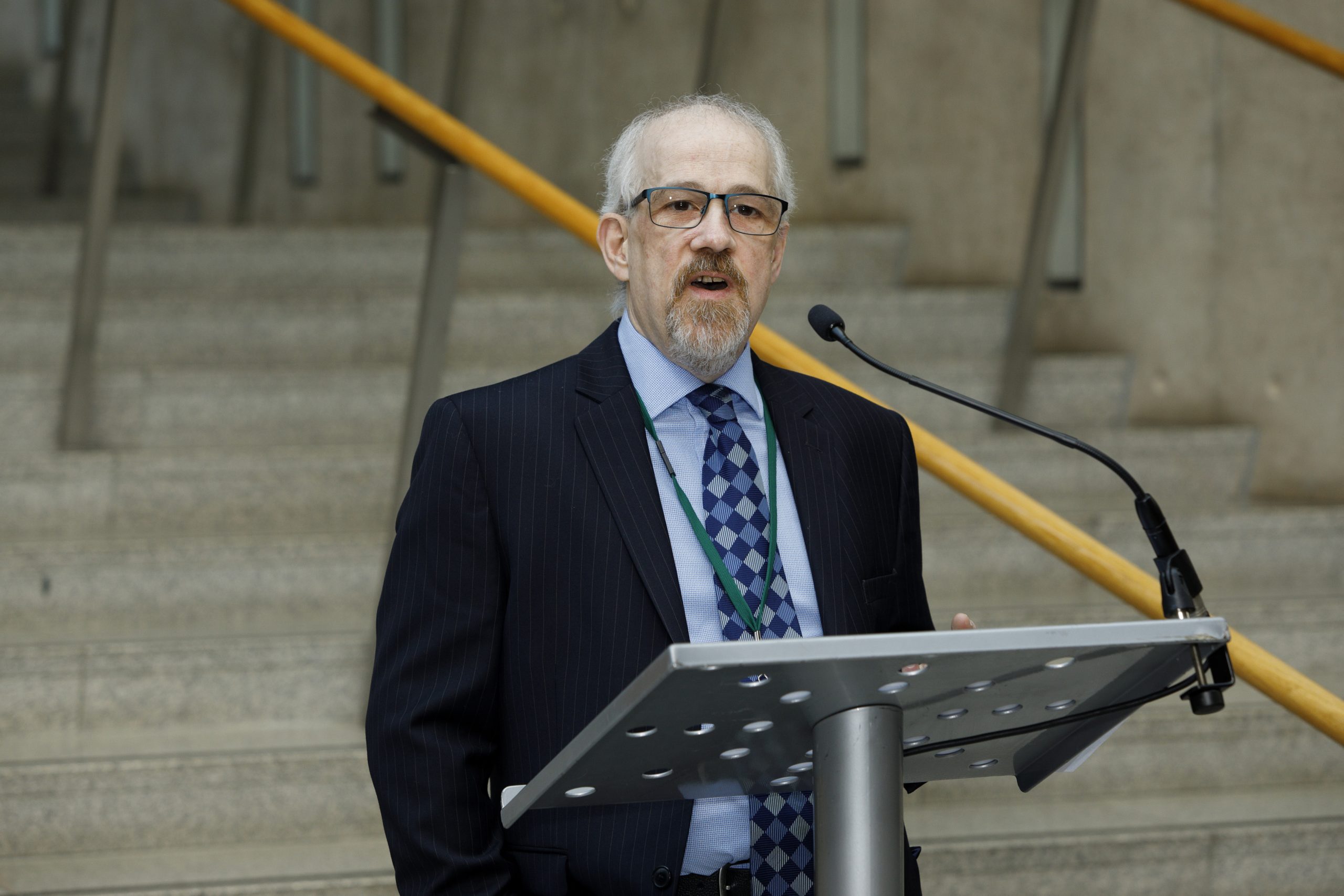
- Written by: Gordon Johnston — VOX (Voices of eXperience) — Director
- Published: 24th April 2023

Gordon Johnston, Director of VOX, reflects on what is needed for a human rights based approach to unlock positive change in mental health.
The publication of ‘The Opportunity Is Now’ is especially timely for those of us working in mental health, with several major developments on the horizon.
The Scottish Government’s new Mental Health and Wellbeing Strategy will be published before the summer recess. A set of standards for adult secondary mental health services will be implemented soon. And the extensive final report from the Scottish Mental Health Law Review (The Scott Review) is currently being considered by government.
The forthcoming incorporation of human rights treaties into Scots law is very welcome. This legislation could bring opportunities for major improvements within mental health. I say ‘could’ quite deliberately here – because experience shows that good legislation doesn’t necessarily translate into real improvements for people.
Human rights can often be seen as abstract, separate from our everyday lives. The language used may put some off. And it can feel like people with lived experience of mental ill health face more important challenges each and every day. But a human rights based approach could lead to the changes we want.
When The ALLIANCE and VOX (Voices of eXperience) consulted on new standards for adult secondary mental health care, we asked people with lived experience and carers what changes they would like to see.
They outlined five main priorities: easier access to support, better information to make the system simpler, consistency across the country, improved communications, and to be treated as equal partners in their own care.
These priorities were not expressed in human rights language – but they clearly echo the PANEL principles commonly used in human rights frameworks. And what are service standards but a way of realising the right to health?
The Scottish Mental Health Law Review was more explicit in its final report, stating that the purpose of legislation should be, “to ensure that all the human rights of people with a mental or intellectual disability are respected, protected and fulfilled.”
So could adopting a human rights based approach in mental health become the key that unlocks positive change? Possibly – but there are several things that need to be put into place first.
‘The Opportunity Is Now’ correctly recommends that a programme of human rights education should be considered. But this must not be limited to those who design and deliver services – the duty bearers in human rights language. It must also be extended to the rights holders – and that’s each and every one of us. How can we be sure that our rights are being upheld unless we have knowledge of what those rights actually are?
And, just as many people require advocacy services to support their interactions with an often complex and bureaucratic health and care system, many will require expert assistance to realise their human rights. Collective advocacy organisations should also be key partners in redesigning the mental health system, ensuring that the voices of lived experience are front and centre.
The Scott Review puts this very well: “The Scottish Government should provide resource to ensure people with lived experience and unpaid carers with lived experience can participate in work to implement recommendations on an equal footing with others.” I couldn’t agree more!
The next few years will be very important in mental health. We all know the system is currently under great pressure. New community based initiatives focussed on early intervention, prevention and recovery are required – in addition to high quality mental health services. And we must tackle the societal inequalities that drive so many other issues for excluded communities.
But, if we all work together, we can drive change in the mental health system using a human rights based approach.
Read ‘The Opportunity is Now‘ report in full.
End of page.
End of page.
You may also like:
To mark ‘What matters to you?’ Day, The ALLIANCE's Barbara Flynn considers the impact of Tommy Whitelaw’s talks for nurses and midwives.
Continue readingThe ALLIANCE’s Humans of Scotland project works to challenge stigma.
Continue readingIn her latest TFN column, our Chief Officer Sara Redmond reflects on post election feelings and Scotland’s future.
Continue readingALLIANCE Chief Officer, Sara Redmond, reflects on our Annual Conference 2026 and how we're turning hope into action.
Continue readingALLIANCE member, Catherine, shares the importance of initiatives like 'What Matters To You?' Day in promoting person centred care.
Continue readingLearn about how the ALLIANCE has championed joined-up, person centred care.
Continue readingDementia Action Week highlighted some great resources and support for people living with dementia and their family, friends, and carers.
Continue readingSteven Mair gives us an insight into his role as a gamer at the Glasgow Children’s Hospital Charity.
Continue readingSince 2009, ALISS has helped people find local health and wellbeing support. Any group, big or small, can add their information.
Continue readingThe new Scottish Government must turn promises into action to improve hospice and palliative care
Continue readingTogether, we can create lasting change for everyone living with Crohn’s or Colitis.
Continue readingFind out more about these digital self management tools and how to get in touch to arrange an information session.
Continue readingOur Chief Officer Sara Redmond addresses recent commentary on the relationship between Government and the Third Sector.
Continue readingCornell explores how we can build an environmental human rights-based culture
Continue readingLouise Coupland, Digital Health and Social Care Programme Manager shares her opinions on the national roll out of MyCare.scot.
Continue readingChris Mackie, Director of Digital, looks back at how ALISS has developed, grown, and innovated over time.
Continue readingCrohn’s and Colitis care in Scotland is at a pivotal moment. Urgent action is needed to tackle delays and poor access to vital services
Continue readingThe ALLIANCE’s Lewis Shaw reflects on the importance of rehabilitation support.
Continue readingIsabella Goldie of Deafblind Scotland reflects on the value of partnership work.
Continue readingFind out more about the inaugural Power of Attorney Day taking place on 22 April 2026.
Continue readingDr Hannah Tweed reflects on 20 years of the Scottish Sensory Hub, the important work they do and why it matters.
Continue readingAs part of our 20 year anniversary, Kerry shares her reflections on how far the ALLIANCE has come, our achievements, and our impact.
Continue readingIn her latest TFN column, our Chief Officer Sara Redmond reflects on 20 years since Scotland moved to put children at the centre of policy.
Continue readingCancer care in Scotland is at a critical moment. Macmillan is calling for urgent action ahead of the parliamentary elections in May
Continue readingMhairi Campbell reflects on Premenstrual Dysphoric Disorder (PMDD) not being recognised as having a severe impact on life.
Continue reading